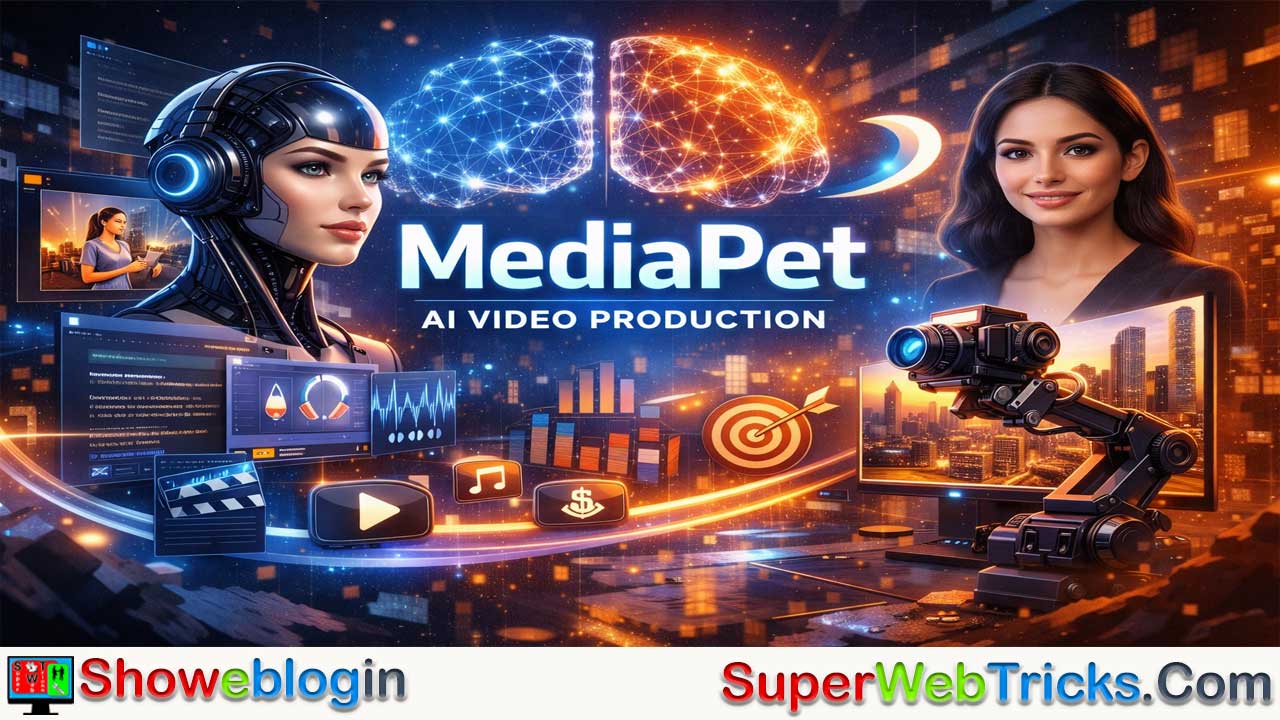



MediaPet revolutionizes digital media production by integrating artificial intelligence with neurometric insights to deliver high-converting, cinematic-quality video advertisements.
Unlike generic generative video tools, MediaPet’s ecosystem combines automated scripting, image generation, animation, and sound design into a cohesive, project-aware interface optimized for marketing performance and creative storytelling. With dual modes—Chat Mode for conversational production and Browser Mode for professional editing—the platform democratizes access to enterprise-grade video creation.
Its neurometric foundation, ethical transparency, and scalable API infrastructure redefine creative workflows, reducing production costs and timelines from weeks to minutes while maintaining visual identity and psychological resonance. Positioned as a “creative operating system,” MediaPet marks a shift from experimental AI video toward performance-driven, impact-oriented storytelling that empowers both marketers and artists to produce authentic, data-optimized narratives at scale.
| Aspect | Details |
|---|---|
| Platform Name | MediaPet |
| Developer | MediaScience |
| Leadership | Dr. Duane Varan |
| Core Focus | Autonomous, performance-driven video ad creation |
| Primary Functionality | AI-powered scripting, animation, narration, and sound design |
| Unique Differentiator | Neurometric data integration for conversion-optimized storytelling |
| Interaction Modes | Chat Mode (conversational workflow) & Browser Mode (manual editing) |
| Output Quality | 1080p–4K cinematic videos with consistent identity and style |
| Production Time | Under 10 minutes (vs. 2–4 weeks traditionally) |
| Subscription Plans | Bronze, Silver, Gold, and Platinum (from $9.99/month) |
| API Availability | REST-based MediaPet API for third-party integration |
| Use Cases | Ads, short films, UGC, brand storytelling |
| Ethical Framework | Transparency, AI labeling, and responsible creative ownership |
| Market Positioning | Ad-centric creative operating system, not just a video generator |
How MediaPet AI Transforms Video Production with Neurometric Intelligence
The global landscape of digital media production is currently undergoing a structural realignment, shifting from a model defined by human-intensive labor and high capital expenditure toward a paradigm of autonomous, performance-driven generation. At the forefront of this transition is MediaPet, an integrated artificial intelligence production suite developed by the research organization MediaScience.
Unlike the broader market of generative video tools which often prioritize visual novelty over marketing efficacy, MediaPet is engineered specifically for high-converting video advertisements and cinematic storytelling, underpinned by decades of neurometric and behavioral research.
By consolidating script generation, image synthesis, high-definition animation, and professional audio engineering into a single, project-aware interface, the platform addresses the primary friction points that have traditionally hindered small-to-medium enterprises and performance marketing teams from achieving national-quality creative output.
The Evolution from Generative Novelty to Performance-Driven Production
The genesis of MediaPet is fundamentally rooted in the deficiencies of traditional creative testing methodologies. Historically, marketers relied on animatics—rudimentary, storyboard-style animations—to test advertising concepts before committing to expensive production budgets. However, these proxies were often poor predictors of an ad’s actual success in the marketplace. MediaPet was conceived as a solution to this diagnostic gap, allowing creators to move from a raw idea to a “final cut” quality advertisement in under ten minutes, thereby enabling authentic concept testing and rapid iteration.
Under the leadership of Dr. Duane Varan, the platform integrates MediaScience’s proprietary neurometric data into its generative algorithms. This integration ensures that the resulting content is not merely aesthetically pleasing but is structurally optimized to command attention and drive conversion, mimicking the psychological impact of premium national campaigns. The platform’s ability to democratize human expression is a central theme in its development, aiming to unleash the power of human imagination by removing the financial and technical barriers that have long characterized professional-grade video production.
Core Technological Components of the MediaPet Suite
MediaPet is not a singular AI model but rather a multi-modal orchestration layer that synchronizes diverse specialized engines to manage the end-to-end production of digital assets. This “Stack of Apps” consolidation is a key economic driver for the platform, as it eliminates the need for users to manage multiple, disparate subscriptions for scripting, image generation, and sound design.
Integrated Generative Modules
The platform’s capability is divided into several specialized tools, each optimized for a specific stage of the creative workflow.
| Functional Tool | Capabilities and Output | Technical Significance |
|---|---|---|
| Scripting Engine | Automated generation of compelling marketing narratives and scene breakdowns. | Tailors scripts to specific target audiences and brand-defined goals. |
| Image Generation | High-fidelity synthesis of first-frame images and environmental assets. | Supports 2K and 4K resolution enhancements while maintaining visual consistency. |
| Video Animation | 1080p, 30fps rendering with over 100 distinct animation styles. | Utilizes 3D generative technology to facilitate custom camera angles and scene control. |
| Voice & Narration | Natural speech synthesis with advanced lip-syncing and voice cloning. | Offers a comprehensive library of diverse professional voices and styles. |
| Audio Composition | Automated generation of custom musical scores and Foley effects. | Matches the rhythmicity, tone, and variance of the music to the visual sequence. |
Maintaining Identity and Visual Continuity
A persistent challenge in the generative video industry is the “drift” of character and environmental consistency across different scenes. MediaPet addresses this through a patent-pending technology that preserves identity and style across frames.
By allowing users to upload reference images, the AI maintains a stable visual anchor, ensuring that products, characters, and settings remain consistent from the introductory shot to the final call-to-action. This capability is critical for brand integrity, as it prevents the visual hallucinations that often plague less sophisticated text-to-video generators.
Production Workflow Methodologies: Chat and Browser Modes
MediaPet offers two distinct interaction paradigms designed to cater to varying levels of technical expertise and creative requirements: Chat Mode and Browser Mode.
The Conversational Interface: Chat Mode
Chat Mode represents a shift toward “vibe coding” workflows, where users direct the production process through natural language conversations. This interface acts as an agentic assistant, guiding the user through ideation, script refinement, and asset generation. With the release of MediaPet 2.0, this interface became the primary engine for mobile-first production.
The defining innovation of the Chat Mode is project-level intelligence. Unlike traditional AI tools that treat each clip as an isolated generation, the MediaPet chat engine understands the context of the entire project. This allows for “global edits,” a feature where a single instruction—such as “change the color of the product to blue across all scenes” or “make the narrator’s tone more professional”—is executed simultaneously across every segment of the video. This shift from clip-level generation to project-level management significantly reduces production time and cognitive load for the creator.
The Professional Environment: Browser Mode
For users who require precise, frame-by-frame control, Browser Mode offers a traditional drag-and-drop interface and a comprehensive timeline editor. This mode is designed for fine-tuning the AI’s output, allowing for manual adjustments to timing, audio levels, and visual placement. It provides a bridge for creative professionals who want to leverage AI for the “heavy lifting” of generation while maintaining a high degree of manual oversight over the final composition.
| Feature Comparison | Chat Mode | Browser Mode |
|---|---|---|
| Interaction Model | Conversational AI (Natural Language). | Manual Drag-and-Drop / Timeline. |
| Ideal User Profile | Non-experts, mobile users, rapid prototyping. | Professional editors, agencies, precision designers. |
| Project Control | Global instructions applied to all scenes. | Granular, shot-by-shot adjustment capability. |
| Speed of Execution | Extremely fast (Step-by-step guidance). | High precision with longer adjustment times. |
Strategic Content Modalities: Ads, Movies, and UGC
Version 2.0 of the platform expanded the scope of MediaPet beyond its initial focus on advertisements to include specialized modes for cinematic storytelling and user-generated style content.
Ads Mode and MediaScience Insights
The “Ads Mode” remains the cornerstone of the platform, specifically optimized for digital marketing. It leverages “MediaScience Insights” to structure commercials based on data-driven performance metrics. These ads emphasize target audience optimization and strong calls-to-action, ensuring that the generated content aligns with commercial objectives.
The platform supports automatic formatting for diverse aspect ratios, ensuring seamless deployment across horizontal platforms like YouTube and vertical channels like TikTok and Instagram Reels.
Short-Form Movies and Story Mode
To cater to filmmakers and digital storytellers, MediaPet introduced “Short-Form Movies” and “Story Mode”. These modalities prioritize character development, artistic visual styles, and narrative arcs rather than purely promotional hooks.
Users can customize genres and develop complex character identities that the AI maintains across the entire narrative sequence. This is particularly useful for brands attempting to engage in “content-led marketing,” where the focus is on storytelling and authenticity rather than overt advertising.
AI Spokespeople and User-Generated Content (UGC)
One of the most impactful additions to the suite is the expanded spokesperson capability. This mode allows marketers to create “UGC-style” videos without the logistical challenges of hiring influencers or production crews.
- AI-Generated Avatars: A library of diverse, photorealistic digital humans that can deliver scripted testimonials or product explanations.
- Custom Photo Integration: Users can upload photos of real people to create talking avatars with natural speech synthesis and synchronized lip movements.
- Rich Demo Segments: A groundbreaking feature that allows the AI to generate a video demonstration of a product being used, based on a single uploaded photo of that product.
Economic Disruption and the Cost of Creativity
MediaPet’s value proposition is fundamentally built on economic democratization. Traditional professional video production is a high-barrier industry characterized by long timelines and significant costs.
Comparative Production Metrics
Traditional advertising production often involves multiple vendors, complex contracts, and extensive team coordination. MediaPet replaces this multi-week process with a platform that delivers a professional “final cut” in under ten minutes.
| Metric | Traditional Agency Model | MediaPet AI Solution |
|---|---|---|
| Production Time | 2–4 Weeks. | < 10 Minutes. |
| Average Cost | $25,000+ per video. | Included in monthly subscription (starts at $9.99). |
| Revision Process | Extra costs ($500+) and delays. | Instant global edits via chat. |
| Resource Needs | External producers and editors. | No technical experience required. |
Subscription Framework and Credit System
The platform operates on a tiered subscription model, structured to accommodate varying production volumes and feature requirements. All tiers include access to the “NEO Agent” and the full suite of creation tools.
| Plan Tier | Monthly Investment | Credit Allocation | Production Capability (Estimated) |
|---|---|---|---|
| Bronze | $9.99 | 1,000 credits/mo | Up to 20 videos / 40 images (2K). |
| Silver | $15.99 | 2,000 credits/mo | Up to 40 videos / 80 images (2K). |
| Gold | $30.99 | 4,000 credits/mo | Up to 80 videos / 160 images (2K). |
| Platinum | $109.99 | 15,000 credits/mo | Maximum power for enterprise/high-volume. |
The credit system provides a granular way for users to manage their resources, with larger plans offering significant discounts relative to the baseline Bronze tier (e.g., 23% discount on the Gold plan).
Technical Infrastructure and the Developer Ecosystem
MediaPet is built as a cloud-native platform, ensuring accessibility across all major operating systems, including Windows, Mac, and Linux, through standard web browsers. The infrastructure is designed for enterprise-grade reliability, offering 24/7 AI availability and scalable processing power.
The MediaPet API: Powering Third-Party Innovation
For organizations looking to integrate autonomous video production directly into their own software ecosystems, MediaPet provides a robust API. The API is characterized by a simple REST architecture with clean, well-documented endpoints that allow for rapid deployment.
- Lightning-Fast Generation: API calls can trigger the generation of complete video scripts and scenes in under 60 seconds.
- Asynchronous Processing: The system handles variable volume by allowing developers to submit jobs and poll for results, ensuring that large-scale operations do not suffer from latency.
- Agentic Workflow API: A premium endpoint ($9.99 per call) that provides a fully automated “agentic” experience, requiring only business details to produce a finished ad.
- Voices Integration: A specialized endpoint (GET https://mediapet.ai/api/v1/voices) provides a real-time list of available narration styles for use in custom applications.
Partnerships and White-Label Solutions
The platform offers multiple “paths” for collaboration beyond individual subscriptions, targeting agencies and enterprise teams.
- Affiliate / Referral Program: Partners earn a 10% recurring commission on all referrals, while their audience receives a 10% discount.
- White-Label Platform: Marketing agencies can launch their own branded AI video suites powered by the MediaPet engine, utilizing managed infrastructure with custom branding.
- Enterprise Pipelines: Large teams with complex needs can co-build automated workflows with the MediaPet team, featuring volume pricing and hands-on design support.
Quality Assurance and User Support Systems
Democratizing high-end video production requires more than just powerful AI; it requires a support structure that enables non-experts to succeed. MediaPet addresses this through a multi-layered support and training ecosystem.
Training and Education
MediaPet offers training through multiple channels to accommodate different learning styles. This includes:
- Help Center & FAQ: A comprehensive repository of information addressing common technical and billing questions.
- Video Tutorials: Step-by-step guides that demonstrate the platform’s core functionalities.
- Live Online Training: Interactive sessions and webinars for teams and individuals seeking hands-on instruction.
24/7 AI Support and Human Assistance
The platform features “AI Support” available 24/7 to resolve immediate technical hurdles. For more complex issues, users can reach out to the dedicated support team at support@mediapet.ai or through the customer support portal integrated directly into the service interface.
Refund and Cancellation Policies
Transparency in billing is a priority for the platform. MediaPet offers a 7-day free trial, and subscriptions can be canceled at any time with no long-term contracts. The refund policy is clearly defined, primarily covering inadvertent subscriptions (if no credits have been used within 7 days) and accidental double payments. All transactions and refunds are managed through the Stripe platform to ensure security and reliability.
Methodological Integrity: The Role of Neurometrics and Ethics
A significant portion of MediaPet’s differentiation stems from its philosophical approach to artificial intelligence. Under Dr. Duane Varan’s leadership, the platform is not just a tool for creation but a medium for responsible and effective communication.
The Impact-Driven Philosophy
Dr. Varan argues that too much AI video today is purely experimental and lacks real-world impact. By integrating MediaScience behavioral data into the generative algorithms, MediaPet ensures that the ads are designed to “command impact” rather than just looking impressive in a demo. This focus on performance ensures that even users with no artistic “eye” can produce content that resonates psychologically with their target audience.
Transparency and AI Labeling
MediaPet is a vocal advocate for transparency in AI production. The organization’s research suggests that informing audiences that content is AI-generated does not diminish its effectiveness. This finding supports the platform’s position that accountability is paramount; creators are encouraged to take ownership of their AI-employed work, ensuring that it represents different communities properly and adheres to ethical standards of expression.
Comparative Analysis in the Competitive AI Landscape
When evaluated against other players in the AI video field—such as text-to-video generators (e.g., Luma AI, Kling) or avatar-focused platforms (e.g., Synthesia)—MediaPet distinguishes itself through its holistic, ad-centric architecture.
| Competitor Type | Primary Focus | Comparison with MediaPet |
|---|---|---|
| Text-to-Video Generators | Visual novelty and clip generation. | MediaPet provides project-level continuity and cross-scene editing. |
| Avatar-Based Platforms | Talking-head educational content. | MediaPet integrates avatars with rich demo segments and marketing-specific scripting. |
| Ad-Centric Generators | ROI-focused static and video assets (e.g., AdCreative.ai). | MediaPet offers cinematic storytelling, custom musical scores, and 3D camera control. |
The “Agentic Mode” released in version 1.7 represents the latest evolution in this competition, moving toward full automation where the AI acts as a creative director rather than just a generator. This capability positions MediaPet closer to a “Creative Operating System” for businesses than a point solution for video clips.
Future Outlook: The Scaling of Human Imagination
The trajectory of MediaPet indicates a future where the constraints of production no longer limit the reach of an idea. By shifting the focus from “learning a tool” to “directing intent,” the platform allows for creative workflows that are conversation-led and mobile-first. The democratization of high-quality video production through AI means that the visual language of the internet will continue to evolve toward narrative authenticity, where even the smallest brands can ship cinematic ads at scale.
As AI capabilities mature, the differentiation between platforms will increasingly depend on the intuition of the human directing the system. MediaPet’s infrastructure is built to enhance this human “eye” for art, allowing artists and marketers to see and imagine in ways that were previously cost-prohibitive. In this new era, accountability and creative ownership remain with the human creator, but the machine serves as an infinitely scalable executor of that vision, transforming the “tension between machine and human” into a powerful collaborative opportunity.
FAQs about MediaPet AI
What is MediaPet?
MediaPet is an AI-powered video production suite developed by MediaScience that automates the creation of high-quality video advertisements and cinematic storytelling content.
Who developed MediaPet?
MediaPet was developed by MediaScience under the leadership of Dr. Duane Varan, a pioneer in neurometric and behavioral research.
What makes MediaPet different from other AI video generators?
Unlike typical generative video tools that focus on visual novelty, MediaPet emphasizes marketing performance, neurometric impact, and brand consistency.
How does MediaPet use neurometric data?
It integrates MediaScience’s proprietary neurometric insights to optimize videos for emotional engagement, attention retention, and conversion effectiveness.
What are the main features of MediaPet?
MediaPet includes automated scripting, image generation, 3D animation, natural voice narration, and audio composition—all within one unified platform.
What is Chat Mode in MediaPet?
Chat Mode allows users to create videos through natural language conversations, guiding them step-by-step in scriptwriting, design, and editing.
What is Browser Mode in MediaPet?
Browser Mode offers a traditional drag-and-drop interface with a timeline editor for users seeking frame-level precision and manual control.
How fast can MediaPet create a video?
MediaPet can generate a professional-quality “final cut” video in under ten minutes, drastically reducing production time.
What output quality does MediaPet support?
The platform supports 1080p and 4K resolutions with advanced consistency features to prevent identity drift across scenes.
Can MediaPet maintain visual consistency across scenes?
Yes, its patent-pending technology preserves character, product, and environment identity throughout an entire project.
What types of content can MediaPet produce?
MediaPet creates digital ads, short-form films, cinematic stories, and user-generated style videos with AI spokespeople.
Does MediaPet support AI-generated avatars?
Yes, it includes a library of photorealistic digital humans and allows users to create custom avatars using uploaded photos.
What is the role of AI spokespeople in MediaPet?
AI spokespeople act as digital brand ambassadors, delivering scripted messages or product demos using realistic speech and expressions.
How does MediaPet benefit small businesses and marketers?
It democratizes high-quality production, enabling small teams to create national-level ads without expensive equipment or expertise.
What are the subscription plans available for MediaPet?
Plans include Bronze ($9.99), Silver ($15.99), Gold ($30.99), and Platinum ($109.99), offering various credit allocations and production capacities.
What is the MediaPet credit system?
Users receive monthly credits to produce videos and images, with higher plans providing more credits and cost efficiency.
Is MediaPet cloud-based?
Yes, it’s fully cloud-native, accessible via any major browser on Windows, Mac, or Linux without installation.
Does MediaPet offer an API?
Yes, the MediaPet API allows developers to integrate AI video generation into third-party platforms using REST architecture.
What is the Agentic Workflow API?
It’s a premium API endpoint that enables fully automated video creation by inputting only basic business details.
Can MediaPet be white-labeled?
Yes, agencies can launch their own branded AI video platforms powered by the MediaPet engine.
What kind of support does MediaPet provide?
MediaPet offers 24/7 AI support, human assistance, live training, tutorials, and an extensive help center.
Is there a free trial available?
Yes, MediaPet provides a 7-day free trial with full access to core features and the ability to cancel anytime.
What is MediaPet’s refund policy?
Refunds are available for unused credits within 7 days or in case of accidental double payments, managed securely via Stripe.
How does MediaPet ensure ethical AI use?
The platform promotes transparency by encouraging creators to label AI-generated content and adhere to ethical creative practices.
Does AI labeling affect ad performance?
According to MediaScience research, labeling content as AI-generated does not negatively impact its effectiveness or audience trust.
How does MediaPet compare with Luma AI or Synthesia?
MediaPet focuses on performance-driven advertising and storytelling, while Luma AI and Synthesia specialize in visual novelty or avatar content.
Can MediaPet be used for storytelling and filmmaking?
Yes, its Story Mode and Short-Form Movie Mode allow users to create character-driven narratives and cinematic scenes.
What industries benefit most from MediaPet?
Advertising agencies, e-commerce brands, content creators, and small businesses all benefit from MediaPet’s automation and quality output.
Is technical expertise required to use MediaPet?
No, even non-experts can produce professional videos using Chat Mode’s conversational guidance.
Can users collaborate within MediaPet?
Yes, enterprise pipelines allow team collaboration and customized workflows for agencies and large organizations.
How does MediaPet enhance creative efficiency?
It replaces multiple subscriptions and tools by combining scripting, animation, and audio design into one intelligent interface.
What drives MediaPet’s creative philosophy?
Its design philosophy centers on augmenting human imagination, making creativity accessible and performance-oriented.
What is the economic advantage of using MediaPet?
It reduces costs from tens of thousands of dollars to affordable monthly subscriptions, making high-end production accessible to all.
How secure is MediaPet’s payment system?
All payments and refunds are processed securely via the Stripe platform, ensuring transparency and protection.
Does MediaPet support mobile production?
Yes, with the introduction of MediaPet 2.0, mobile-first production became fully supported via Chat Mode.
What is meant by MediaPet as a “Creative Operating System”?
It refers to MediaPet’s ability to act as a unified ecosystem that manages every stage of content creation autonomously.
How does MediaPet promote responsible AI creativity?
By integrating behavioral science, transparency, and accountability, it ensures that AI serves human creativity rather than replacing it.
What future developments are expected from MediaPet?
Future updates aim to deepen automation, enhance agentic capabilities, and expand integrations for large-scale enterprise workflows.
How does MediaPet empower human creators?
It removes technical and financial barriers, allowing creators to focus on vision, narrative, and impact while AI handles production.
Why is MediaPet significant in the evolution of advertising?
It represents a paradigm shift from human-dependent production to autonomous, data-driven creativity optimized for performance and emotion.


Leave a Reply
You must be logged in to post a comment.