


The modern advertising ecosystem is currently navigating a period of profound transition, characterized by the intersection of generative artificial intelligence and performance-driven marketing.
As social platforms shift toward algorithmic discovery—prioritizing content that captures and retains user attention in seconds—the traditional creative production model has become a significant bottleneck for e-commerce brands and agencies. The “Content Crisis,” a term used to describe the inability of manual workflows to satisfy the high volume of creative variations required for effective A/B testing, has necessitated the rise of automated creative engines.
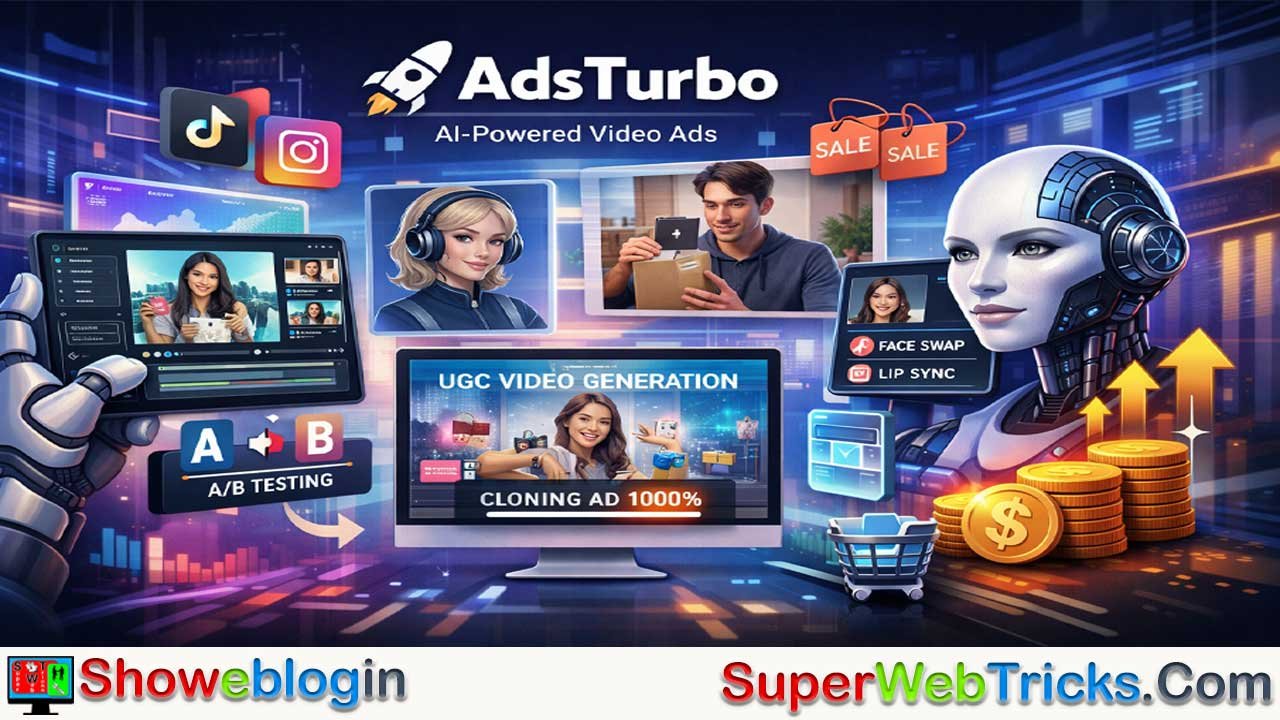
AdsTurbo (adsturbo.ai) has emerged as a specialized solution within this landscape, offering a suite of intelligent tools designed to create, replicate, and optimize high-converting video advertisements with unprecedented speed.
The Strategic Imperative of Automated Creative Production
In the contemporary digital landscape, the performance of an advertising campaign is increasingly dictated by the quality and quantity of its creative assets rather than just technical targeting parameters. Platforms like TikTok, Instagram, and YouTube Shorts have conditioned users to expect a continuous stream of fresh, engaging content. This has led to a phenomenon known as creative fatigue, where an ad’s effectiveness diminishes rapidly—often within 10 to 14 days—causing cost-per-click (CPC) and cost-per-acquisition (CPA) to spike.
To combat this, marketers must adopt a “test and learn” philosophy that requires dozens, if not hundreds, of ad variations for a single product campaign. Traditional production cycles, which involve hiring directors, actors, and editors, are not only prohibitively expensive but also too slow to react to the ephemeral nature of social media trends. AdsTurbo addresses this strategic gap by providing an “AI-powered ads” engine that promises “turbocharged growth” through rapid asset generation and competitive cloning.
The Evolution of Creative Workflows
| Stage of Workflow | Traditional Method | AdsTurbo AI Method |
|---|---|---|
| Ideation | Manual brainstorming and mood boards. | AI-driven “Viral Lib” exploration and competitive analysis. |
| Scripting | Copywriters drafting scripts over days. | Instant script generation and extraction (Video to Text). |
| Production | Physical sets, lighting, and actors. | AI-generated UGC videos from product URLs or images. |
| Post-Production | Manual editing, color grading, and titles. | Automated lip-sync, upscaling, and watermark removal. |
| Localization | Re-filming or manual dubbing for each region. | Seamless video translation and localized lip-syncing. |
Core Functional Ecosystem of AdsTurbo
AdsTurbo is structured as a multimodal platform that integrates several distinct AI capabilities into a unified dashboard. This integration is critical because it allows a user to move from competitive research to final rendering without switching between disparate tools. The platform is currently powered by Sora 2 technology, positioning it at the cutting edge of generative video fidelity.
Ad Clone and the Viral Library: The Mechanics of Creative Arbitrage
One of the most potent features of the AdsTurbo ecosystem is the “Ad Clone” functionality. In the world of performance marketing, “creative arbitrage” refers to the ability to identify a winning visual structure in the market and adapt it for a different product or brand. The Ad Clone tool allows users to recreate the structure, pacing, and “vibe” of a trending or viral video instantly.
This process is supported by the “Viral Lib,” a specialized exploration tool that permits marketers to analyze top-performing ads across specific categories or competitors. By deconstructing these ads based on their “hook,” specific selling points, and visual flow, the Viral Lib serves as a blueprint for the generative engine. This eliminates the “cold start” problem in creative production, where marketers struggle to know which visual styles will resonate with their target audience.
Product Video Generation and URL-to-Video Workflows
For e-commerce brands, especially those operating on platforms like Shopify or Amazon, the “Product Video” tool is a primary driver of ROI. This feature enables the conversion of static product photos into dynamic, user-generated content (UGC) style video ads. By simply uploading an image or providing a product link, the AI analyzes the visual elements and context to generate a ready-to-run advertisement in seconds.
The effectiveness of this tool is rooted in the “native” aesthetic of modern social media ads. Traditional high-gloss studio commercials often feel like “ads” and are quickly scrolled past. In contrast, AI-generated UGC-style videos mimic the authentic look and feel of content created by actual users, which has been shown to improve engagement rates significantly.
Advanced Video Manipulation: Face Swap, Lip Sync, and Upscaling
The platform provides a suite of high-fidelity editing tools that allow for granular control over the generated content.
- Character and Face Swap: This feature enables the replacement of faces within a video with high fidelity. This is particularly useful for brands that want to maintain a consistent “spokesperson” across different ad variations or localize an ad by changing the ethnic background of the actor to match the target market.
- Lip Sync: Leveraging advanced neural networks, the Lip Sync tool creates realistic talking heads where the mouth animations are perfectly synchronized with the audio track. This is essential for preventing the “uncanny valley” effect that can undermine the credibility of AI-generated content.
- Video Upscaling: To ensure professional-grade output, AdsTurbo includes AI-powered lossless upscaling, which improves the resolution and clarity of video clips, making them suitable for high-definition displays and premium ad placements.
Technical Architecture and Integration
The efficacy of AdsTurbo is largely dependent on its underlying technological stack and its ability to integrate with the existing tools used by digital marketers.
The Role of Sora 2 and Generative Fidelity
The mention of Sora 2 as the generative engine for AdsTurbo is a significant indicator of the platform’s focus on visual quality. Sora 2 represents a leap forward in the ability of AI to maintain temporal consistency—ensuring that objects and characters do not morph or disappear between frames. This level of fidelity is required for producing ads that can compete with professionally filmed content.
Platform Integrations and Automation
AdsTurbo offers specific integrations for the most prominent social media and community platforms, including:
- Instagram and TikTok: For vertical, mobile-first video ads.
- YouTube and X (formerly Twitter): For a mix of short-form and widescreen content.
- Discord: For community-driven content creation and management.
- E-commerce Ecosystems: Specific mention of tools optimized for “Amazon stores” and general e-commerce workflows suggests a focus on the direct link between creative production and sales conversion.
Performance Metrics and Economic Analysis
The shift to AI-driven ad generation is not merely a technical upgrade; it is an economic necessity for scaling modern businesses. By reducing the cost and time associated with creative production, brands can reallocate their budgets toward higher ad spend and more aggressive testing.
ROI and Conversion Optimization
Data from the broader AI ad generation sector provides a benchmark for what users can expect from platforms like AdsTurbo. For instance, AI-generated ads have been reported to achieve up to 14x better conversion rates compared to manually designed ads in certain contexts. In the e-commerce sector, the transition from static images to AI-generated video has been linked to a 2.7x increase in leads and a 1.7x higher ROI.
The mathematical representation of this improvement can be analyzed through the lens of the Click-Through Rate (CTR). If we define as the number of clicks and as the number of impressions, the CTR is given by:
In a multi-variant environment enabled by AdsTurbo, the “winning” ad is identified through iterative testing. By producing 20 variations instead of one, the probability of finding a high-performing outlier increases exponentially. If the probability of any single ad being a “top performer” is , the probability of finding at least one top performer in variations is:
As increases from 1 to 20, approaches 1, even if is relatively low.
Comparative Pricing and TCO (Total Cost of Ownership)
The economics of AdsTurbo are characterized by a “Freemium” model that lowers the initial barrier to entry. Users can “start for free” and gain access to basic features before committing to a subscription that unlocks the full suite of “intelligent tools”.
| Pricing Aspect | Traditional Agency Model | AdsTurbo / AI Model |
|---|---|---|
| Setup Fee | $1,000 – $5,000 | $0. |
| Cost Per Video | $500 – $2,500 | ~$5 – $10 (implied by credits). |
| Turnaround Time | 2 – 4 Weeks | Seconds to Minutes. |
| Monthly Subscription | N/A (Project-based) | Typical range $39 – $99. |
| Human Capital | Requires 3-5 specialists | Can be managed by 1 solo marketer. |
Operationalizing AdsTurbo: A Step-by-Step Workflow
To extract the maximum value from AdsTurbo, users must move beyond simple “push-button” generation and adopt a structured operational workflow.
1. Competitive Research and Intelligence
The workflow begins in the “Viral Lib.” Instead of guessing what might work, the user analyzes successful ads from direct competitors or similar niches. The “Video Analysis” tool provides a one-click breakdown of shots, helping the marketer understand the specific hooks and transitions that are currently driving engagement.
2. Strategic Scripting and Hook Variation
Once the “vibe” is identified, the user uses the “Video to Text” or “Article Wizard” type features to generate or extract a script. It is crucial at this stage to generate multiple “hooks”—the first 3 seconds of the video. The script should follow a proven psychological structure:
- The Hook: A bold claim or a relatable problem.
- The Solution: Introducing the product as the hero.
- The Proof: Social proof or a demonstration of benefits.
- The Call to Action (CTA): A clear instruction on what to do next.
3. Generative Assembly and Localization
The user uploads product images to the “Product Video” tool to create the base UGC footage. If the ad is intended for a global audience, the “Video Translation” and “Lip Sync” features are used to localize the content. This ensures that the message is delivered in the native language of the target market, which significantly increases trust and conversion.
4. Refinement and Quality Assurance
The “Video Upscaling” and “Watermark Removal” tools are used to polish the final assets. Before deployment, the marketer reviews the ads to ensure that the “Face Swap” and “Lip Sync” appear natural and that the brand’s aesthetic is maintained.
5. Deployment and Algorithmic Scaling
The final ads are uploaded to the respective ad managers (Meta, TikTok, etc.). The marketer monitors the initial data, using the high volume of assets to perform rapid A/B testing. Winning creatives are scaled with higher budgets, while underperforming ones are swapped for new AI-generated variations, thus preventing creative fatigue.
Market Context and Competitive Positioning
AdsTurbo exists within a crowded field of AI marketing tools. Understanding its specific strengths relative to competitors is vital for tool selection.
Comparison with AdCreative.ai and Creatify
While AdCreative.ai is often praised for its “Creative Scoring” system and its ability to generate multi-format ads (banners, social posts, etc.), it is sometimes viewed as being more focused on Meta platforms. Creatify, on the other hand, is a specialist in UGC video generation and AI avatars, offering a vast library of over 700 avatars.
AdsTurbo’s competitive advantage appears to lie in its “Ad Clone” and “Viral Lib” features, which emphasize performance through replication and speed. It is positioned as a tool for “turbocharged growth,” targeting users who want to move from “seeing an ad” to “creating a better version” in the shortest possible time.
The Role of User Sentiment and Skepticism
Despite the technical prowess of these tools, there remains a significant dialogue within the professional community regarding the “human element.” On platforms like Reddit, PPC specialists often argue that while AI can “speed up the analysis and deploy,” a human brain is still required for high-level strategy and to manage the “Google Ads credentials”. There is a noted skepticism about “guinea pigging” new software without established, long-term reviews, although the sheer visibility of AdsTurbo’s own advertisements is often cited as proof of its effectiveness.
Ethical and Governance Considerations
As the barriers to creating high-fidelity video content fall, the ethical use of such technology becomes a priority for brands.
Intellectual Property and Replication
The “Ad Clone” and “Watermark Removal” features, while powerful, carry responsibilities. Users must ensure that they are not violating copyright laws or intellectual property rights when replicating the “vibe” of a competitor’s ad. The platform’s terms of service generally place the burden of compliance on the user, emphasizing the need for accurate information and adherence to jurisdictional laws.
Brand Safety and the “Uncanny Valley”
The risk of AI “hallucinations”—where the AI generates distorted or illogical visual elements—can damage a brand’s reputation if not caught during the review process. Furthermore, if AI avatars or lip-syncing are not handled with precision, they can fall into the “uncanny valley,” creating a sense of unease in the viewer that negatively impacts the product’s perceived quality.
Future Outlook: The Convergence of Generative and Predictive AI
The trajectory of AdsTurbo and similar platforms points toward a future where creative generation is fully integrated with real-time performance data. We are moving toward a “closed-loop” system where:
- Autonomous Iteration: The AI monitors ad performance and automatically generates new versions of an ad’s hook if the CTR drops below a certain threshold.
- Hyper-Personalization: Ads are generated on-the-fly for individual users based on their specific browsing history and preferences, a level of personalization that is impossible with manual production.
- Sora 3 and Beyond: The next generation of video models will likely support longer durations and even more complex physical interactions, allowing for full “filmmaking” capabilities within an ad generator.
Conclusions and Practical Guidance for AI Tool Users
AdsTurbo represents a significant shift in the power dynamics of the advertising industry. By providing high-end production capabilities to small businesses and solo entrepreneurs, it democratizes the ability to compete in high-stakes attention markets.
Actionable Recommendations
- Start with Competitive Intelligence: Use the Viral Lib as your primary source of inspiration. Do not reinvent the wheel; instead, find what is working and use Ad Clone to adapt it to your unique selling proposition.
- Focus on “The First 3 Seconds”: Use the platform to generate at least 5 different hook variations for every product ad. The hook is the most important variable in mobile-first advertising.
- Optimize for Localization: Do not settle for one-size-fits-all global campaigns. Use the Video Translation and Lip Sync tools to speak directly to local audiences in their native tongue.
- Maintain Human Oversight: View the AI as a “creative accelerator” rather than an autonomous replacement. The “human brain” is still required to ensure brand alignment, ethical compliance, and high-level strategic integration.
- Leverage the Freemium Model: Use the “start for free” option to validate the tool’s effectiveness for your specific niche before scaling to a full subscription.
The integration of AdsTurbo into a marketing stack is not just about making videos; it is about building a sustainable, high-velocity creative pipeline that can survive and thrive in an increasingly automated world. By mastering these tools today, marketers position themselves at the forefront of the next era of digital commerce.






Leave a Reply
You must be logged in to post a comment.