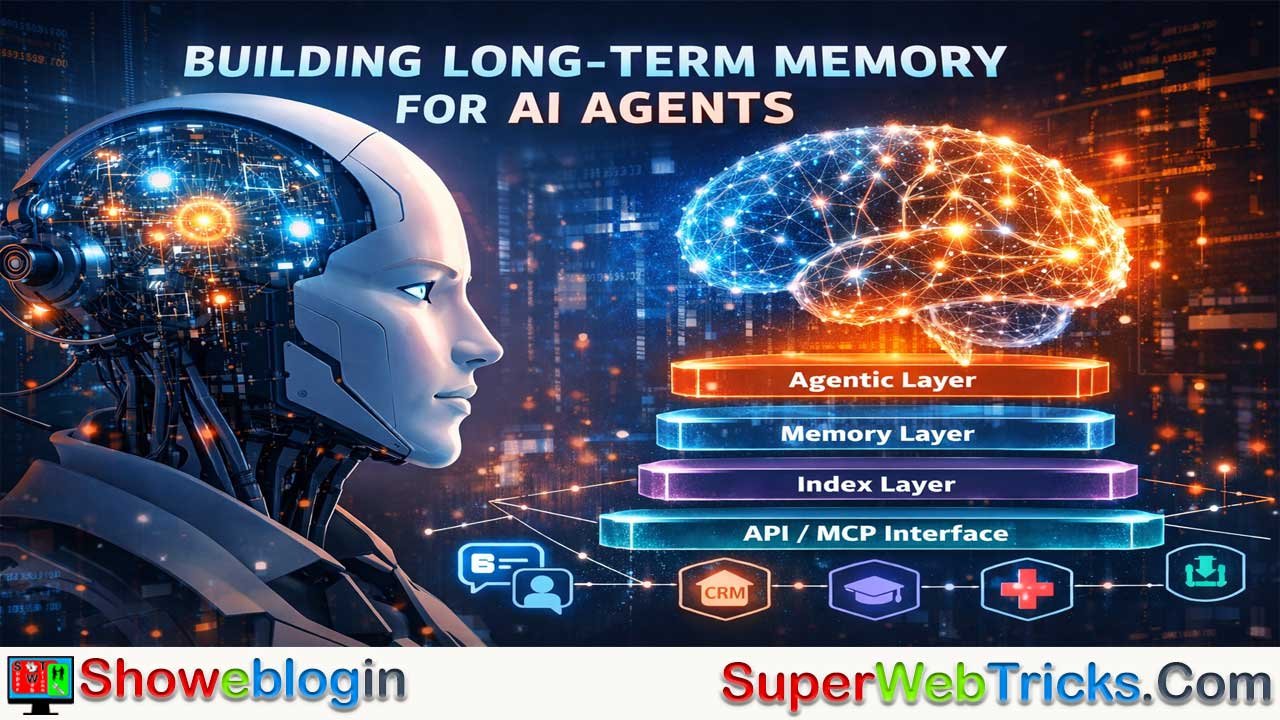






Modern AI models are powerful but have a major limitation: they cannot remember past interactions once a session ends. This makes them like “brilliant amnesiacs.” EverMemOS, developed by EverMind AI, aims to solve this problem by creating a structured memory system for AI agents.
Instead of relying on large context windows or simple databases, it builds a “digital brain” that stores, organizes, and recalls information over time. The system has four layers inspired by the human brain and a three-phase memory process that captures interactions, converts them into structured knowledge, and uses them to guide future reasoning.
This allows AI agents to maintain long-term context, learn from users, and behave consistently. With strong benchmark results and initiatives like the Memory Genesis Competition 2026, EverMind is working toward AI systems that evolve over time and act as continuous, personalized partners rather than temporary tools.
| Category | Details |
|---|---|
| Company | EverMind AI |
| Core Product | EverMemOS |
| Main Purpose | Adds long-term memory to AI models so they can remember interactions and evolve over time |
| Problem Solved | Modern LLMs are stateless and forget past conversations once a session ends |
| Core Concept | A structured “digital brain” that stores, organizes, and recalls knowledge for AI agents |
| Architecture | Four layers: Agentic Layer, Memory Layer, Index Layer, API/MCP Interface Layer |
| Memory Lifecycle | Episodic Trace Formation → Semantic Consolidation → Reconstructive Recollection |
| Key Innovation | Memory Processor that actively shapes AI reasoning instead of passive database retrieval |
| Benchmark Results | LoCoMo: 93.05%, LongMemEval-S: 83%, HaluMem: 90.04% |
| Developer Ecosystem | Memory Genesis Competition 2026 |
| Competition Support | Backed by organizations including OpenAI and Amazon Web Services |
| Use Cases | Enterprise collaboration, CRM copilots, personal AI companions, education tutors, healthcare assistants |
EverMemOS Explained: The Digital Brain Powering Next-Gen AI Agents
The evolution of artificial intelligence has reached a critical bottleneck where the sheer scale of parameters and the breadth of training data are no longer the primary determinants of utility. Instead, the industry is confronting a structural deficiency within the standard Transformer architecture: the absence of persistent, long-term memory.
Modern Large Language Models (LLMs) are frequently characterized as brilliant amnesiacs, exhibiting high levels of reasoning within a single session but remaining fundamentally stateless and unable to evolve through continuous interaction. EverMind AI addresses this systemic limitation through the introduction of EverMemOS, a specialized Memory Operating System designed to serve as the foundational data infrastructure for the next generation of agentic AI.
By moving beyond the ephemeral nature of the context window and the limitations of traditional vector databases, EverMemOS introduces a structured “digital brain” that facilitates temporal continuity, deep personalization, and long-term behavioral consistency.
The Structural Limitation of Modern LLM Architectures
The current state of artificial intelligence is defined by a paradox where models possess a near-encyclopedic knowledge of their training data but lack the capacity to remember a single detail from a conversation held five minutes prior once the session terminates. This phenomenon of broken context and “amnesia” is not merely a technical inconvenience but a fundamental barrier to the development of truly autonomous agents.
While industry leaders have attempted to mitigate this through the expansion of context windows—sometimes reaching millions of tokens—this approach is increasingly viewed as a brute-force solution that introduces significant economic and computational overhead.
The expansion of context windows is subject to diminishing marginal returns. Ultra-long contexts are expensive to process, increase latency, and often suffer from a degradation in effectiveness, where the model struggles to retrieve specific information buried in the middle of a massive prompt. EverMind posits that the future of long-term agents depends not on larger buffers, but on structured memory organization. This necessitates a shift from “stateless tools” to “continuous, personalized partners” that can grow and learn from every interaction.
EverMemOS: Architecting a Foundational Memory Operating System
EverMemOS is positioned as a comprehensive operating system for memory, moving beyond the paradigm of simple data retrieval into active memory application. This system is designed to transform unbounded interaction streams into an organized, evolving knowledge structure.
At its core, EverMemOS is intended to serve as the critical component that transforms a “static genius” into an entity capable of reasoning with near-infinite context and maintaining consistency over months or years of operation.
The Four-Layer Cognitive Architecture
The architecture of EverMemOS is explicitly inspired by human biological structures, specifically the organization of the brain’s executive and memory functions. This bio-mimetic approach ensures that the system handles information in a way that facilitates both immediate action and long-term learning.
| Layer | Biological Analogue | Functional Responsibility |
|---|---|---|
| Agentic Layer | Prefrontal Cortex | Task understanding, strategic planning, and final execution. |
| Memory Layer | Cortical Memory Networks | Long-term storage and retrieval of interaction history and acquired knowledge. |
| Index Layer | Hippocampus | Utilization of embeddings and Knowledge Graph (KG) indexing for navigation and relational mapping. |
| API / MCP Interface Layer | Peripheral Nervous System | Integration with external enterprise systems and environmental interaction via protocols. |
This four-layer stack allows for a modular and extensible framework that can adapt to various scenarios, from precision-oriented enterprise tasks to emotionally intelligent companion AIs. The separation of the Index Layer (the “Hippocampus”) from the primary Memory Layer (the “Cortex”) is particularly significant. It allows the system to maintain a complex map of relationships—the Knowledge Graph—without cluttering the raw storage of information. This enables the agent to perform sophisticated retrieval that goes beyond simple keyword or vector similarity.
The Three-Phase Memory Lifecycle: From Engrams to Reasoning
EverMemOS does not treat memory as a static repository. Instead, it implements a dynamic lifecycle that mimics the biological process of memory formation, consolidation, and recall. This lifecycle is what allows the platform to turn raw data into an evolvable “soul” for intelligent agents.
Phase 1: Episodic Trace Formation
In the initial phase, the system captures raw interaction streams. Unlike standard logging, this process involves the formation of “Episodic Traces,” which include not only the text of the interaction but also the temporal context and the agent’s internal state at the time. This ensures that every interaction is grounded in its specific moment, preventing the “temporal flattening” common in traditional databases where old and new information are treated with equal weight regardless of relevance.
Phase 2: Semantic Consolidation
The most critical innovation of EverMemOS is the Semantic Consolidation phase. During this stage, the system analyzes episodic traces to extract structured semantic units known as “MemUnits”. These MemUnits are then integrated into adaptive memory graphs. This process is analogous to the human brain’s ability to extract the “gist” of an event while discarding irrelevant details. It allows the agent to update its understanding of a user’s preferences, goals, and behavioral patterns over time, ensuring that the model’s knowledge evolves rather than remaining frozen.
Phase 3: Reconstructive Recollection
When an agent is presented with a new task or query, it engages in Reconstructive Recollection. Rather than simply pulling a static chunk of text from a database, the system uses the memory processor to shape the model’s reasoning and outputs actively. The memory processor moves beyond retrieval-augmented generation (RAG) by allowing stored knowledge to directly inform the generative process, leading to interactions that are consistent, coherent, and deeply personalized.
Technical Innovations in Memory Processing
EverMemOS introduces several technical paradigms that distinguish it from existing memory solutions like Mem0, Zep, or basic vector databases. The focus is on moving “beyond a database” into a system where memory is an active participant in reasoning.
Hierarchical Memory Extraction (HME)
Traditional RAG systems often rely on flat similarity-based retrieval, which can be unstable and contextually blind. EverMemOS utilizes Hierarchical Memory Extraction to convert raw text into a multi-layered structure of semantic MemUnits. This hierarchy allows the system to navigate from high-level concepts down to specific episodic details, providing a more stable foundation for long-term contextual understanding.
Memory Processor vs. Passive Database
In a standard AI setup, the database is a passive entity that is queried by the model. EverMemOS introduces a “Memory Processor” that acts as a cognitive filter and organizer. This processor ensures that the most relevant and consolidated knowledge is prioritized, effectively allowing the AI to “think” with its memory rather than just “referencing” it. This capability is what enables agents to achieve SOTA results on reasoning benchmarks, as it bridges the gap between raw data and actionable insight.
Empirical Validation: SOTA Performance Across Benchmarks
The claims of EverMind regarding the superiority of EverMemOS are supported by verifiable performance metrics across several demanding industry benchmarks. These benchmarks evaluate different aspects of memory, from reasoning accuracy to long-term behavioral consistency.
Performance Summary Table
| Benchmark | EverMemOS Result | Metric Focus | Comparative Context |
|---|---|---|---|
| LoCoMo | 93.05% | Overall Accuracy | Outperforms all existing memory systems and full-context models with fewer tokens. |
| LongMemEval-S | 83.00% | Temporal Reasoning | Leading score in temporal reasoning and knowledge updates. |
| HaluMem | 90.04% | Memory Integrity | Sets a new standard for recall and hallucination reduction. |
| PersonaMem v2 | Superior | Deep Personalization | Validates behavioral consistency across diverse user scenarios. |
The results on the LoCoMo benchmark (93.05%) are particularly noteworthy, as they demonstrate that EverMemOS can achieve higher accuracy than models utilizing an exhaustive context window, while significantly reducing the computational cost (token consumption). Furthermore, the system achieved a 92.3% reasoning accuracy on LoCoMo when evaluated by an LLM-Judge, highlighting its ability to not just remember data points but to understand their implications.
The high performance on LongMemEval-S (83.00%) indicates that EverMemOS excels at managing “Knowledge Updates”—the ability to correct or refine previously stored information as new data becomes available. This is essential for agents operating in dynamic environments where facts and user requirements change frequently.
The Ecosystem and The Memory Genesis Competition 2026
EverMind is not only developing a platform but is also actively fostering an ecosystem of developers and researchers to set the industry standard for AI memory. The Memory Genesis Competition 2026, supported by industry titans such as OpenAI, AWS, and Shanda, is a central part of this strategy.
Competition Tracks and Objectives
The competition is structured to address the three core areas of the EverMemOS ecosystem: agent development, platform integration, and core infrastructure optimization.
| Track | Objective | Targeted Outcomes | Prize Pool Details |
|---|---|---|---|
| Track 1: Agent + Memory | Build intelligent agents with evolving memory. | Personal Digital Twins, CRM Copilots, Healthcare Companions. | 5 Winners: $5,000 each + Revenue Share |
| Track 2: Platform Plugins | Integrate EverMemOS into daily workflows. | VSCode Plugins, Chrome Extensions, Slack/Discord integrations. | 7 Winners: $3,000 each + Revenue Share |
| Track 3: OS Infrastructure | Optimize the core EverMemOS platform. | Performance tuning, architectural improvements, core functionality. | 3 Winners: $3,000 each + Revenue Share |
The inclusion of a “Revenue Share” component—where winners receive 100% of direct revenue and 50% of subscription-driven revenue in the forthcoming Marketplace—underscores EverMind’s commitment to building a sustainable developer economy. This model incentivizes the creation of high-value tools that enhance the overall utility of the EverMemOS platform.
Key Competition Dates and Phases
The competition is designed as a multi-phase global event, culminating in a ceremony at a historic technology venue.
- January 23, 2026: Official Kickoff and Registration.
- January 30, 2026: EverMemOS Cloud Invitation launch.
- February 1 – March 16, 2026: Creation and Submission Phase.
- March 2026: Evaluation Phase (Judging by Quality, Memory Integration, and Community Impact).
- April 4, 2026: Finals and Ceremony at the Computer History Museum, Mountain View, CA.
Strategic Use Cases and Industry Impact
The flexibility of the EverMemOS framework allows it to be applied across a vast spectrum of AI tool use cases. By providing the “foundational memory,” EverMind enables developers to create tools that were previously impossible due to the “statelessness” of underlying models.
Enterprise Collaboration and Knowledge Retention
In an enterprise setting, EverMemOS enables the transition from isolated AI queries to a persistent organizational memory. This is particularly valuable for:
- Multi-User Collaboration: Retaining context across different team members interacting with the same agent.
- Customer Service: Maintaining continuous contextual understanding throughout a long-term customer relationship.
- Sales/CRM Copilots: Building agents that remember client history, preferences, and past objections to provide a more tailored sales experience.
Personal and Companion AI
For consumer-facing AI, the platform provides the mechanism for deep personalization.
- Personal Digital Twins: Creating a digital representation of a user that evolves based on their daily interactions and long-term goals.
- Education Companions: Developing tutors that remember a student’s past mistakes and learning pace, adapting the curriculum accordingly.
- Healthcare and Therapy Agents: Ensuring that an agent maintains the continuity required for therapeutic or health-tracking scenarios, which demand high levels of trust and consistent behavioral history.
Developer Resources and Integration Path
EverMind provides a suite of resources to assist developers in adopting the EverMemOS paradigm. The focus is on ease of integration and high performance.
- EverMemOS Cloud: A hosted solution (invitations beginning Jan 30, 2026) for developers to build memory-augmented agents without managing their own infrastructure.
- Open Source Repository: The core platform is available on GitHub (EverMind-AI/EverMemOS), allowing for community-driven improvements and transparency.
- API and MCP Support: The platform includes an interface layer for seamless integration with external systems via the Model Context Protocol (MCP).
- Documentation and Quickstart Guides: Comprehensive technical resources are hosted on GitHub to facilitate rapid onboarding and deployment.
Evaluation Frameworks and the Future of Memory
EverMind has not only developed a memory system but also a unified evaluation framework to provide a fair and reproducible standard for AI memory performance. This framework benchmarks EverMemOS against other leading systems like Mem0, MemOS, Zep, and MemU, ensuring that memory systems are tested under consistent datasets and metrics.
This commitment to evaluation suggests a future where “memory quality” becomes a standard specification for AI agents, similar to how “parameter count” or “context window size” is currently viewed. By establishing these benchmarks, EverMind is leading the shift toward a more nuanced understanding of AI intelligence—one where the ability to learn and remember is as important as the ability to reason.
Conclusion: The Path to Evolving Intelligence
The mission of EverMind is to shatter the fundamental limitation of modern AI: its inability to remember. Through EverMemOS, the company provides the foundational infrastructure required to move from stateless, amnesiac models to persistent, evolving partners. By architecting a system that mimics the biological lifecycles of memory—trace formation, consolidation, and recollection—EverMind is effectively building a “digital brain” for agentic AI.
The combination of SOTA benchmark performance, a robust developer ecosystem through the Memory Genesis Competition, and a modular architecture suitable for both enterprise and personal use cases positions EverMemOS as a critical component of the future AI stack. As the industry continues to evolve, the distinction between a “tool” and a “partner” will increasingly depend on the quality and depth of the agent’s memory. EverMind AI is providing the architecture to ensure that this foundation is not just persistent, but truly evolvable.
FAQs about EverMemOS
What problem does EverMemOS solve in modern AI systems?
EverMemOS solves the lack of long-term memory in AI models. Most large language models forget previous conversations after a session ends, which prevents continuous learning and personalization.
What is EverMemOS?
EverMemOS is a memory operating system created by EverMind AI that gives AI agents structured long-term memory so they can remember interactions, learn over time, and maintain consistent behavior.
Why do current AI models struggle with memory?
Most AI models are stateless and rely only on temporary context windows. When the conversation ends, the model loses all previous information unless it is stored externally.
How does EverMemOS store and manage memory?
EverMemOS captures interaction data as episodic traces, converts them into structured semantic units called MemUnits, and organizes them in adaptive memory graphs for efficient retrieval and reasoning.
What makes EverMemOS different from traditional vector databases or RAG systems?
Traditional systems only retrieve stored data. EverMemOS uses a memory processor that actively organizes and prioritizes knowledge so the AI can reason with memory instead of simply referencing it.
What are the main layers in the EverMemOS architecture?
The system has four layers: the Agentic Layer for decision-making, the Memory Layer for long-term storage, the Index Layer for navigation and relationships, and the API/MCP Interface Layer for integration with external systems.
What benchmarks show the performance of EverMemOS?
EverMemOS achieved strong results across benchmarks such as LoCoMo with 93.05% accuracy, LongMemEval-S with 83% in temporal reasoning, and HaluMem with 90.04% in memory integrity.
What types of applications can use EverMemOS?
It can power enterprise knowledge assistants, CRM copilots, customer support agents, personal AI companions, education tutors, and healthcare assistants that require long-term contextual understanding.
What is the Memory Genesis Competition 2026?
The Memory Genesis Competition 2026 is a global developer challenge designed to encourage innovation around memory-powered AI agents, plugins, and infrastructure built on EverMemOS.
How does EverMemOS help create more personalized AI experiences?
By remembering user preferences, past interactions, and behavioral patterns, EverMemOS allows AI agents to adapt their responses and provide consistent, personalized assistance over time.






Leave a Reply
You must be logged in to post a comment.