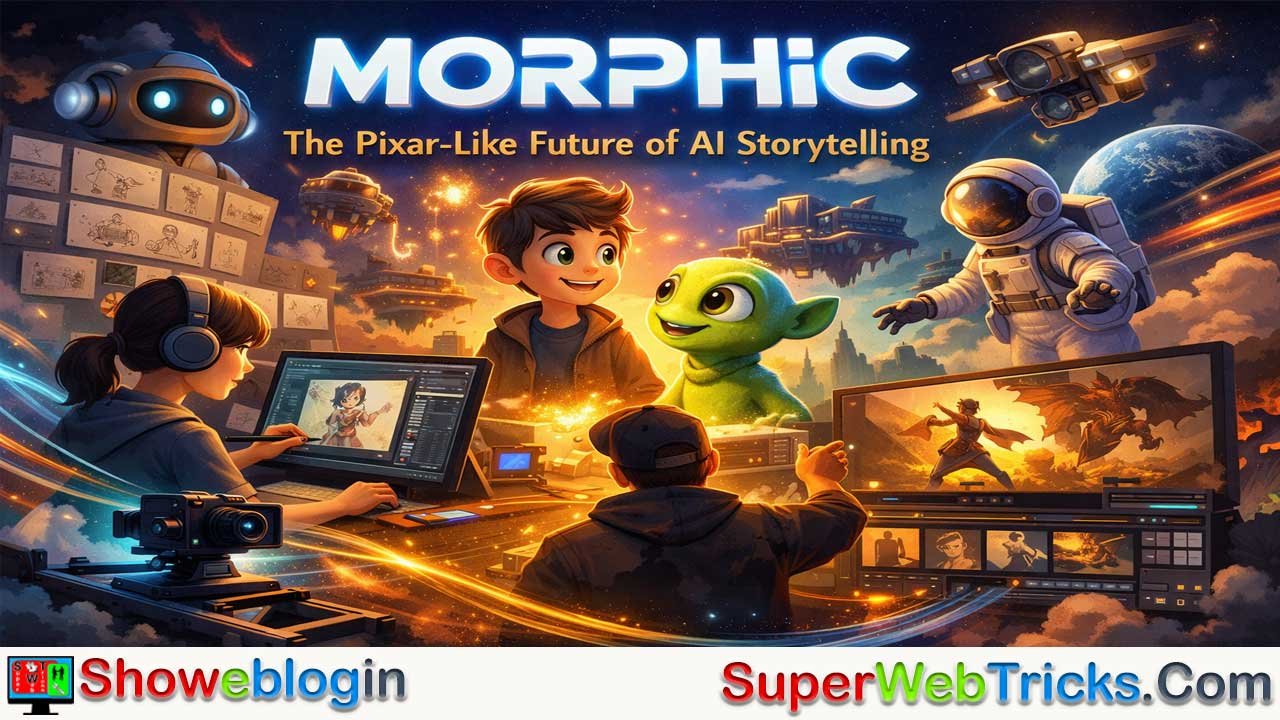





Morphic is redefining the future of AI storytelling by blending Pixar-level cinematic ambition with cutting-edge generative technology. Positioned as a “tech-centric storytelling studio,” it enables creators to produce professional-grade animated content through a structured workflow spanning three key stages—Canvas for visual planning, Copilot for interactive iteration, and Compose for final story assembly.
Prioritizing control, consistency, and creativity, Morphic solves major challenges in AI video generation with tools like Custom Models, 3D motion control, inpainting, and frame interpolation. Backed by a global team and flexible, credit-based pricing, Morphic empowers storytellers, animators, and studios of all sizes to transform ideas into polished, emotionally resonant narratives—ushering in a new era where AI becomes the creative partner, not just the tool.
| Category | Details |
|---|---|
| Platform Name | Morphic |
| Core Vision | Democratize Pixar-level storytelling using AI-driven precision and control |
| Founder | JD Kanani |
| Headquarters | San Francisco, with offices in Dubai and Bangalore |
| Team Size | ~22 members across 8 countries |
| Philosophy | “Control over chaos” — empower storytellers while AI manages complexity |
| Main Components (Trinity) | Canvas: Visual planning hubCopilot: Conversational creative partnerCompose: Final story assembly |
| Key Technologies | Custom Models, 3D motion control, camera precision, inpainting, frame interpolation |
| Major Strengths | Consistency, creative control, professional workflow, cinematic motion |
| Use Cases | Animation, filmmaking, marketing, education, YouTube content |
| Pricing Model | Credit-based (1 image = 1 credit, 1 video = 10 credits) |
| Free Plan | $0 / forever — 45 total credits, 1 custom model |
| Standard Plan | $28/mo — 2,800 credits, 8 custom models |
| Pro Plan | $54/mo — 6,000 credits, 15 custom models |
| Pro Max Plan | $180/mo — 24,000 credits, 100 custom models |
| Education Plan | ~$15/mo — 400 credits (students & educators) |
| Commercial Use | Allowed in all paid plans; no watermarks |
| Credit Validity | Subscription credits don’t roll over; Credit Packs last 90–180 days |
| Target Users | Filmmakers, animators, content creators, marketers, educators |
| Tagline Summary | “The Pixar-like AI studio empowering storytellers with control and cinematic precision.” |
Morphic: The “Pixar-Like” Future of AI Storytelling
In the saturated world of generative AI, where tools often feel like toys or isolated gimmicks, Morphic stands out with a singular, ambitious vision: to become a “Pixar-like tech-centric facility” that democratizes the production of blockbuster content. By merging advanced deep learning with a structured professional workflow, Morphic isn’t just generating images—it is engineering a new era of “smart storytelling.”
This Showeblogin article explores how Morphic is redefining the creative process, from its philosophical roots to its granular pricing structures.
The Philosophy: Control Over Chaos
At the heart of Morphic is a manifesto that views stories as the “universal language of connection.” While many AI tools celebrate randomness, Morphic prioritizes control. Founder JD Kanani and his team believe that storytellers should focus on the joy of creation while technology handles the complexities behind the scenes.
The platform is built on the premise that every story deserves to be told, and that the barrier to entry—whether it be cost, technical skill, or resource constraints—should be dismantled. This isn’t just about automation; it’s about giving directors, animators, and marketers the precision they need to execute a specific vision without compromise.
The Morphic Trinity: A Seamless Workflow
Morphic moves beyond the simple “text-to-image” prompt box by offering a cohesive three-stage ecosystem designed to mimic a professional production pipeline:
- Canvas (Where ideas take shape):The creative process rarely starts with a final shot. Canvas acts as a visual planning hub, allowing creators to organize animations, storyboard concepts, and layout their narrative arc before a single frame is rendered. It changes the workflow from linear generation to holistic planning.
- Copilot (Where iteration flows):Acting as a collaborative partner, Copilot is a conversational interface where users can chat to refine ideas. It allows for real-time iteration, helping creators tweak prompts and concepts dynamically, much like a director brainstorming with a concept artist.
- Compose (Where final stories form):This is the assembly line. Compose brings the fragmented assets—characters, backgrounds, and motion—into a final, cohesive narrative. It is where the “story” actually emerges from the raw materials.
Technological Breakthroughs
Morphic’s feature set addresses the most common complaints regarding AI video generation: consistency and control.
- Deep Consistency with Custom Models:One of the hardest challenges in AI is keeping a character looking the same from Scene A to Scene B. Morphic solves this with Custom Models, allowing users to train the AI on specific characters and styles. Whether you are on a Standard plan with 8 models or a Pro Max plan with 100, you can ensure your protagonist wears the same face throughout the film.
- 3D Motion & Camera Precision:Static images are brought to life not just by warping pixels, but by placing them in a 3D space. Users can direct the camera to pan, tilt, zoom, or pedestal with intent, creating depth-based motion that feels cinematic rather than artificial.
- Inpainting & Refinement:Need to remove a stray object or change a character’s expression? The Inpainting tool allows for precise edits using a single prompt, meaning you don’t have to regenerate an entire scene to fix one mistake.
- Frame Interpolation:To ensure fluidity, the platform can take 2-5 keyframes and automatically generate the in-between frames, smoothing out the motion to create professional-grade video sequences.
The Company Behind the Vision
Morphic is not a faceless algorithm; it is a globally distributed team of experts.
- Global Footprint: With offices in San Francisco, Dubai, and Bangalore, the team of ~22 members spans 8 countries.
- Diverse Expertise: The team comprises specialists in game development, blockchain, machine learning, finance, and media.
- Mission: They aim to merge rapid entertainment content development with cost-effective production strategies, collaborating with internal and external studios, production houses, and YouTubers.
Pricing & Accessibility
Morphic employs a credit-based system where 1 image costs 1 credit and 1 video generation costs 10 credits. The pricing tiers are designed to scale from hobbyists to enterprise studios.
| Plan | Cost (Annual Billing) | Monthly Credits | Custom Models | Ideal For |
|---|---|---|---|---|
| Free | $0 / forever | 45 (total) | 1 | Testing the waters |
| Standard | $28 / mo | 2,800 | 8 | Focused solo creators |
| Pro | $54 / mo | 6,000 | 15 | Professionals & small teams |
| Pro Max | $180 / mo | 24,000 | 100 | Scaling creators & agencies |
| Education | ~$15 / mo | 400 | – | Students & Educators |
Note: Paid plans allow for commercial use and remove watermarks. Unused subscription credits do not roll over, but “Credit Packs” can be purchased that remain valid for 90–180 days.
Conclusion
Morphic is positioning itself as the operating system for the next generation of storytellers. By combining the speed of AI with the precision of traditional animation tools, it offers a glimpse into a future where a single creator can rival the output of a major studio.
For those looking to move beyond simple GIFs and into complex visual storytelling, Morphic appears to be the platform of choice for 2026 and beyond.
FAQs about Morphic
What is Morphic?
Morphic is an AI-powered storytelling platform designed to create Pixar-like animated content with professional control and cinematic precision.
Who founded Morphic?
Morphic was founded by JD Kanani, known for his work in tech innovation and creative AI systems.
What makes Morphic different from other AI tools?
Unlike most generative AI tools focused on random output, Morphic prioritizes consistency, structured workflows, and storytelling control.
What is the main philosophy behind Morphic?
Morphic’s philosophy, “Control over chaos,” focuses on empowering creators to tell stories while AI manages the complex technical details.
How does Morphic’s workflow operate?
Morphic operates through three core stages—Canvas for planning, Copilot for iterative refinement, and Compose for assembling the final story.
What is Canvas used for?
Canvas is the visual planning hub where creators storyboard, outline scenes, and organize ideas before rendering begins.
What does Copilot do?
Copilot acts as a conversational AI partner, helping users refine ideas and prompts in real time for smoother creative iteration.
What happens in the Compose stage?
Compose is where all assets—characters, backgrounds, and motion—come together into a cohesive, cinematic narrative.
How does Morphic ensure visual consistency?
Morphic uses Custom Models to maintain character and style consistency across all scenes and shots.
Can users control camera motion in Morphic?
Yes, Morphic offers precise 3D camera controls including pan, tilt, zoom, and pedestal for cinematic movement.
Does Morphic allow scene editing?
Yes, with inpainting tools, users can edit specific parts of a frame, such as removing objects or adjusting expressions, without regenerating the entire scene.
What is frame interpolation in Morphic?
Frame interpolation automatically generates in-between frames from keyframes, resulting in smoother video motion.
What kind of team powers Morphic?
Morphic’s global team of around 22 professionals includes experts in AI, animation, blockchain, game design, and filmmaking.
Where is Morphic based?
Morphic operates from San Francisco, with offices in Dubai and Bangalore.
Who is Morphic designed for?
It’s designed for filmmakers, animators, marketers, studios, YouTubers, and educators seeking cinematic-quality storytelling tools.
What pricing model does Morphic use?
Morphic uses a credit-based system where 1 image costs 1 credit and 1 video costs 10 credits.
Does Morphic offer a free plan?
Yes, the free plan provides 45 total credits and one custom model for testing and exploration.
What are Morphic’s paid plans?
Paid plans include Standard ($28/mo), Pro ($54/mo), Pro Max ($180/mo), and Education (~$15/mo).
Do unused credits roll over each month?
No, monthly credits don’t roll over, but additional “Credit Packs” remain valid for 90–180 days.
Can users make commercial content with Morphic?
Yes, all paid plans allow full commercial use and remove watermarks from output.
How many Custom Models can users train?
Depending on the plan, users can train from 8 models in Standard up to 100 in the Pro Max plan.
Does Morphic support educational users?
Yes, there’s an Education plan for students and teachers at a discounted rate.
What are Morphic’s main technological highlights?
Custom Models for consistency, 3D motion control, inpainting, and frame interpolation for cinematic animation.
Can Morphic be used by small teams or individuals?
Absolutely, Morphic scales from hobbyists to enterprise studios, making it accessible to all levels of creators.
What’s Morphic’s long-term goal?
To become the “operating system” for AI storytelling, where anyone can create studio-quality animated content with ease.






Leave a Reply
You must be logged in to post a comment.