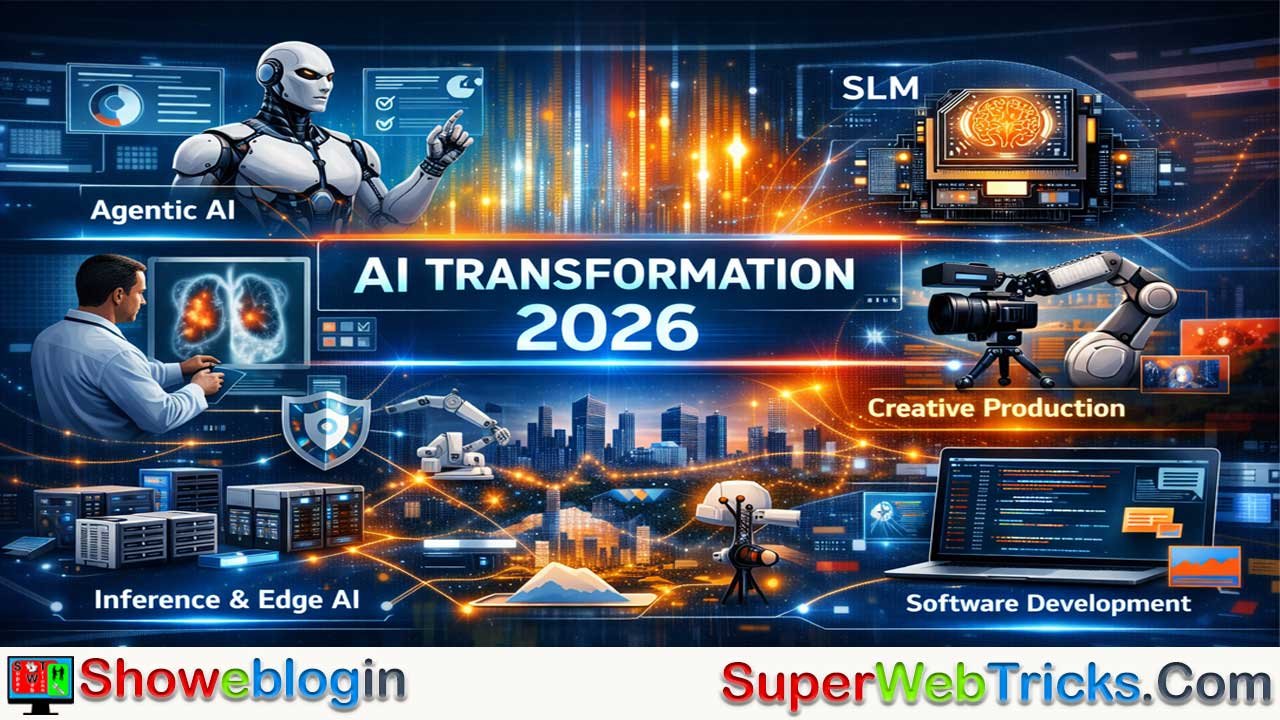




The artificial intelligence landscape has undergone a seismic shift. What began as experimental technology reserved for research labs has now become the operational backbone of businesses worldwide. 2026 marks a pivotal inflection point—not for novel capabilities alone, but for the democratization and integration of AI across every industry, from healthcare to cybersecurity to creative production.
The global generative AI market is valued at approximately USD 37.89 billion in 2025 and is projected to reach USD 55.51 billion in 2026, expanding at a compound annual growth rate (CAGR) of 36.97% through 2035. By 2035, projections suggest the market could exceed USD 1.2 trillion. These staggering figures underscore more than economic growth—they reflect a fundamental transformation in how organizations operate, innovate, and compete.
The standout shift in 2026 is the maturation of agentic AI—intelligent systems that transcend passive assistance to actively execute complex workflows autonomously. Unlike their predecessors that simply responded to prompts, autonomous agents understand goals, plan multi-step actions, and iterate to solve problems with minimal human intervention. This evolution moves AI from tool to teammate.
Market Context: AI’s Explosive Expansion
The numbers tell the story. The generative AI market grew exponentially in 2025, and 2026 represents acceleration, not plateau. Regional insights reveal concentrated strength in North America (41% of 2025 revenue), with Asia Pacific expected to grow at 35.3% CAGR through 2035, indicating rapid adoption across emerging markets.
The software segment captures over 65% of market revenue, underscoring enterprise reliance on AI applications rather than infrastructure alone. Transformer technology—the architecture powering modern large language models—accounts for the highest technology segment share at 42% in 2025.
Market Value Progression (in USD Billions)
| Year | Market Size | Growth Rate |
|---|---|---|
| 2025 | 37.89–53.7 | Baseline |
| 2026 | 55.51–83.3 | 36.97% CAGR |
| 2030 | 356–450 (proj.) | Continued expansion |
| 2035 | 988–1,206 | 31.6–36.97% CAGR |
This trajectory reflects not hype but structural adoption. Companies are moving from pilots to production, from cost centers to competitive advantages.
The Seven Transformative Trends Defining 2026
1. The Rise of Agentic AI: From Reactive Tools to Proactive Partners
The most consequential shift in 2026 is the transition from conversational AI to autonomous agents—systems that independently identify goals, create plans, and execute workflows across environments. Unlike ChatGPT-style chatbots that await commands, agents work continuously, making decisions and taking action.
In practice, agentic AI is reshaping enterprise operations:
- Multi-step workflow automation: An AI agent manages a purchase-to-pay process—checking budgets, selecting vendors, placing orders, and approving invoices. When a supplier is unavailable, the agent automatically adapts, selecting alternatives without human intervention.
- Cross-functional collaboration: Sales, finance, operations, and supply chain teams remain aligned through agent orchestration, reducing delays and manual coordination overhead.
- Domain-specific expertise: Rather than one-size-fits-all solutions, 2026 sees the rise of specialized agents trained for specific industries—legal, healthcare, manufacturing—that embed expert workflows into their decision-making.
Key Challenge: Governance. As agents operate autonomously, accountability and control frameworks must ensure transparency, consistency, and compliance. Organizations investing in governance infrastructure will lead adoption; those ignoring it face operational risk.
Top Agentic AI Tools: Microsoft Copilot, n8n, GitHub Copilot (Agent Mode), Agentforce (Salesforce), and Moveworks.
2. Specialized Small Language Models (SLMs) Outpace One-Size-Fits-All Giants
For years, the AI narrative centered on scaling—building larger, more powerful models. 2026 reverses this logic. Instead of massive general-purpose models, organizations are adopting smaller, domain-specific language models (SLMs) that are more efficient, easier to customize, and cost-effective.
Why the pivot?
- Diminishing returns on scaling: The industry has hit the efficiency frontier. Scaling large models yields marginal improvements at exponential cost.
- Domain optimization: A smaller model fine-tuned for legal document analysis outperforms a massive generalist model on that specific task, with faster inference and lower latency.
- Regulatory and privacy advantages: Smaller models can run on-device or on-premises, addressing privacy concerns and regulatory requirements that restrict cloud-based processing.
Examples include IBM’s Granite, Olmo 3, and DeepSeek’s models, which are gaining enterprise traction precisely because they’re specialized, efficient, and transparent.
Implication for Creators & Businesses: Rather than relying on ChatGPT for every task, 2026 tools are increasingly hybrid—using specialized models for specific functions (e.g., SEO optimization via Surfer SEO, video generation via Runway, code writing via GitHub Copilot) alongside general-purpose tools.
3. AI Infrastructure Shifts from Training to Inference
A quiet but monumental shift is underway: infrastructure investment is pivoting from training new models to optimizing inference—the process of running trained models to make real-world predictions and decisions.
This reflects operational maturity. Organizations have sufficient models; the bottleneck is now deploying them efficiently at scale. This drives several architectural changes:
- Distributed AI “superfactories”: Rather than centralized megacenters, companies are building flexible, geographically distributed AI systems that reduce latency, improve resilience, and drive down costs.
- Edge AI becomes real: AI moving to local devices and edge networks alleviates bandwidth costs, improves privacy, and enables real-time responsiveness—once promise, now production.
- New chip architectures emerge: GPUs remain dominant, but ASIC accelerators, chiplet designs, analog inference systems, and even quantum-assisted optimizers are maturing, creating a heterogeneous compute landscape optimized for inference workloads.
What This Means: AI tools are becoming faster, cheaper, and more privacy-respecting. Inference will become the competitive battleground, not training.
4. Healthcare Transformation Through AI Diagnostics and Prediction
Healthcare is experiencing the most immediate, measurable impact of AI in 2026. Diagnostic accuracy has reached levels surpassing human radiologists, and clinical decision support is now operational standard.
Concrete Performance Gains:
- Radiology: AI systems achieve 94% accuracy in lung nodule detection, significantly outperforming human radiologists at 65%.
- Oncology: AI-powered diagnostic tools for cancer detection achieve a 93% match rate with expert tumor board recommendations.
- Breast Cancer: AI sensitivity reached 90%, exceeding radiologists’ 78%.
- Dermatology: AI algorithms demonstrate comparable or superior performance to dermatologists in diagnosing melanoma and other skin lesions.
Beyond diagnostics, AI is enabling predictive medicine—analyzing patterns in electronic health records, medical imaging, and genomic data to predict disease progression, readmission risks, and treatment responses before they occur. Johns Hopkins Hospital and Microsoft Azure implemented predictive analytics on patient data, enabling early intervention and personalized care plans.
Healthcare AI Tools Reshaping Practice:
- AI Diagnostics: IBM Watson Health, Google DeepMind, Scispot
- Genomic Analysis: AI-powered genetic variant identification for personalized treatment
- Robotic Surgery: AI-assisted surgical systems reducing human error
- Clinical Decision Support: Analyzing multimodal data (imaging, biomarkers, ECG, vital signs) in real-time
The implication: Healthcare is transitioning from reactive (treating illness) to proactive (preventing disease), with AI as the enabling technology.
5. Cybersecurity Enters the Age of Autonomous Defense
Threat actors are weaponizing generative AI to launch targeted spear phishing campaigns, execute low-noise intrusions, and impersonate staff at scale. In response, AI-powered cybersecurity is transitioning from assistive to foundational—autonomous systems capable of detection, investigation, and response without human intervention.
2026 Cybersecurity Landscape:
- Generative AI expands the security TAM: The cybersecurity total addressable market is expanding to USD 2 trillion, driven by intelligent automation.
- Autonomous Response Capabilities: AI platforms now execute the entire detection-to-response lifecycle—sorting alerts, assigning risk scores, suggesting investigation paths, and initiating containment—reducing manual workload and response times.
- Behavioral + Identity + Network Visibility: Unified threat detection platforms integrate network, endpoint, cloud, and identity data, cutting dwell time and enabling real-time threat correlation.
- AI Firewall Runtime Protection: New AI governance tools act as firewalls at runtime, detecting and blocking prompt injections, malicious code, tool misuse, and agent identity impersonation as they occur.
Leading AI Cybersecurity Tools: Darktrace (threat detection + autonomous response), Microsoft Defender, SentinelOne, and emerging specialized platforms like Seceon and AccuKnox.
The critical insight: Organizations that implement AI-driven defense in 2026 will outpace those relying on human SOC analysts alone. The speed, scale, and sophistication of AI attacks now exceed human response capacity.
6. Generative AI Revolutionizes Creative Production
The creative industries are experiencing a productivity inflection. AI-powered design, video, music, and content tools are enabling creators to produce professional-grade outputs at unprecedented speed and scale.
Creative AI Market Leaders:
Image Generation: DALL·E, Midjourney (hyper-realistic imagery with superior aesthetic quality), Stable Diffusion, Adobe Firefly (commercial-ready integration)
Video Production: Runway Gen-4 Turbo (fast, consistent motion), Synthesia (AI avatars and digital storytelling), Descript (transcript-based video editing), Google Veo, OpusClip
Voice & Audio: ElevenLabs Voice Engine v3 (improved pacing, Hindi/Hinglish support, less robotic pauses), Murf AI, Resemble AI (voice cloning)
Music Composition: AIVA (AI-generated original compositions), MuseNet (user-preference tailored music)
Design Integration: Canva AI (auto-design from image uploads, brand-consistent layouts), Adobe Firefly (native integration with Creative Suite), Uizard (UI/UX automation)
For content creators, the workflow is transforming. Concept → Script (ChatGPT-5) → Visuals (Midjourney/Firefly) → Voice (ElevenLabs) → Video Editing (Runway/Descript) → Distribution (Repurpose.io) can now be completed in hours instead of weeks.
7. Long-Context Memory and Reasoning Models Redefine AI Capability
A critical limitation of early generative AI was memory—models could only retain a few messages, and longer conversations lost context and depth. 2026 solves this constraint.
Long-Context Advances:
- Massive context windows: Google Gemini now supports 2 million token context windows, enabling processing of entire codebases, research databases, or legal documents in a single session.
- Near-infinite memory systems: AI systems are gaining persistent, contextual memory, enabling multi-turn interactions that maintain consistency and build understanding over time.
- Reasoning models: OpenAI’s o1 and o3 series prioritize “thinking time” to solve complex logic problems, moving beyond pattern matching to genuine reasoning and problem-solving.
Practical Impact: Customer support AI can maintain context across dozens of interactions. Code assistants understand your entire project architecture. Research tools can synthesize insights from thousands of documents. The quality of AI assistance improves dramatically with extended context.
Category-by-Category AI Tools: The 2026 Essential Stack
AI-Powered Productivity and Office Automation
Modern productivity suites now integrate AI natively, automating routine tasks and enabling intelligent workflows.
| Tool | Primary Function | Best For | Key Differentiator |
|---|---|---|---|
| ChatGPT-5 (OpenAI) | General-purpose reasoning | Writing, analysis, ideation | Deep reasoning capabilities (o1/o3), GPT-5.1 |
| Claude (Anthropic) | Code & in-depth analysis | Developers, researchers | Large 200K context window, Artifacts UI |
| Microsoft Copilot | Office suite integration | Enterprise teams | Deep Excel, PowerPoint, Outlook integration |
| Google Gemini | Multimodal processing | Research, analysis | 2M token context, Google Workspace native |
| Perplexity AI | Research & real-time search | Information gathering | Citations, finance hub, real-time data |
| Notion AI 3.0 | Productivity & automation | Planning, organization | Workflow automation, calendar integration |
For Content Creators: ChatGPT-5 for brainstorming and outline generation, Perplexity for research, Notion AI for content calendar management, and Jasper AI for SEO-optimized long-form content creation.
AI for Software Development
Developers are experiencing the most direct impact of AI in 2026. Code generation, debugging, testing, and documentation are now largely automated.
Top Development AI Tools:
- GitHub Copilot (Agent Mode): Autonomous agent that makes code changes across multiple files, creates pull requests, and iterates to complete tasks. Supports GPT-5 and Claude on Pro+ tier.
- Cursor IDE: Multi-file agent mode for collaborative editing with AI, designed for developers who want granular control.
- Amazon CodeWhisperer: Completes code based on developer prompts, supports multiple languages.
- LangChain / LangGraph: Frameworks for building agentic AI workflows and orchestrating multi-agent systems.
- n8n: Visual workflow automation platform enabling secure, self-hosted agent workflows.
Impact: Developers are writing 40-50% less boilerplate code, spending more time on architecture and less on implementation. Teams are shipping features faster with fewer bugs.
AI Writing and Content Creation for Blogs
For bloggers and content marketers, 2026 AI tools address the entire content lifecycle: ideation, writing, optimization, and distribution.
Essential Content Creation Stack:
| Phase | Tool | Why It Matters |
|---|---|---|
| Keyword Research | Surfer SEO, Frase, Semrush | Data-driven topic selection |
| Outline & Structure | ChatGPT-5, Jasper AI | Content planning |
| Writing | Jasper AI, Koala Writer, Copy.ai | SEO-optimized drafts |
| Optimization | Surfer SEO, Grammarly | Search ranking + readability |
| Visual Content | Canva AI, Midjourney | Graphics, featured images |
| Voice/Video | ElevenLabs, Descript, Runway | Multi-format repurposing |
| Distribution | Repurpose.io, Buffer | Multi-channel publishing |
Top Tools for Bloggers in 2026:
- Jasper AI (formerly Jarvis): SEO-integrated long-form writing with brand voice consistency. Templates for blog posts, YouTube descriptions, and email copy save hours. Integration with SurferSEO ensures optimization for search visibility.
- Koala Writer: High-volume SEO content generation with real-time data access and trending topic suggestions. Popular with affiliate marketers for rapid scaling.
- ChatGPT-5: General-purpose writing partner for outlines, headlines, and content refinement. Prompting tip: Use detailed structures (topic + goal + target audience) for personalized results.
- Surfer SEO: Combines AI writing with on-page optimization, analyzing top-ranking content to inform structure and keyword placement.
- ContentShake AI (SEMrush): Content generation grounded in SEMrush’s SEO toolkit, ensuring alignment with actual search data rather than AI predictions alone.
- Notion AI: Plan content calendars, generate outlines, and organize research in a single workspace.
- Perplexity AI: Research assistant with real-time citations—faster than traditional research for fact-checking and trend identification.
Recommended Content Workflow for 2026:
- Identify high-CPM keywords using Surfer SEO or Frase
- Analyze SERP landscape and competitor content
- Generate outline using ChatGPT-5 with SERP insights
- Write first draft with Jasper AI or Koala Writer (SEO-optimized)
- Refine with Grammarly for grammar/tone
- Apply Surfer SEO for final on-page optimization
- Create visuals with Canva AI or Midjourney
- Convert blog to video, podcast, social clips with Repurpose.io or Descript
- Publish and promote across channels
AI for Video and Animation
Video production has been democratized by AI. What once required professional equipment and skills is now achievable with AI-powered automation.
Leading Video AI Tools:
- Runway Gen-4 Turbo: Fast, consistent motion synthesis for video generation
- Synthesia: AI avatars and digital storytelling, enabling creators to produce videos without filming
- Descript: Transcript-based video and podcast editing—edit video by editing text
- Google Veo: Advanced video generation with commercial viability
- OpusClip: Automated video clipping for social media distribution
For Content Creators: Descript is particularly powerful for bloggers producing YouTube content or podcasts—record, get a transcript, edit the text, and the video syncs automatically.
AI for Visual Design and Branding
Professional design is no longer exclusive to specialists.
Top AI Design Tools:
- Midjourney v7: Hyper-realistic visuals and unique blog graphics without copyright concerns
- Adobe Firefly: Native integration with Creative Suite; commercial-ready images
- Canva AI: Auto-design from image uploads, brand-consistent layouts, accessible to non-designers
- Looka: AI-generated logos and branding systems
- Uizard: UI/UX automation for app and web design
AI for Business and Marketing
Marketing operations are being transformed by AI-driven customer insights, content generation, and campaign optimization.
Top Marketing AI Tools:
- Jasper AI: Ad copy, social media posts, and email campaigns automated
- Anyword: Data-driven copywriting platform predicting content performance before publishing
- Drift: AI chatbots and customer support conversations
- Intercom (Fin): Customer support agent handling common issues autonomously
- Frase / Surfer SEO: Content research and optimization for SEO campaigns
- Tableau AI: Business intelligence and data visualization with natural language queries
AI for Education and Personalized Learning
Education is experiencing a personalization breakthrough.
Leading EdTech AI Tools:
- Duolingo Max/AI: Personalized language learning with AI tutoring
- Coursera AI: Course recommendations and adaptive learning paths
- Socratic: Math and science tutoring powered by AI
- ScribeSense: Personalized study companions
The Categorized AI Tools Directory: Your 2026 Reference
1. Generative AI (Core Models)
- Text: ChatGPT-5, Claude, Gemini, Perplexity, Grok
- Image: DALL·E, Midjourney, Stable Diffusion, Firefly
- Video: Runway, Synthesia, Veo
- Music: AIVA, MuseNet, Murf AI
- Voice: ElevenLabs v3, Resemble AI
2. AI Writing & Content Creation
- Blog Writing: Jasper, Copy.ai, Writesonic, Koala Writer
- Paraphrasing: QuillBot, Wordtune
- Script Writing: Sudowrite, ChatGPT
3. AI Development Tools
- Code Assistants: GitHub Copilot, Codeium, Amazon CodeWhisperer
- Debugging: OpenAI Codex, DeepCode
- Workflow Automation: n8n, LangChain, Zapier
4. AI Art & Design
- Graphic Design: Canva AI, Adobe Firefly
- Logo/Branding: Looka, Brandmark
- UI/UX: Uizard, Lunacy AI
5. AI Video Editing & Animation
- Video Editors: Descript, Runway, OpusClip
- Animation: DeepMotion, Runway
6. AI Voice & Speech
- Text-to-Speech: ElevenLabs, Murf AI, Google Veo
- Speech-to-Text: Whisper AI, Otter.ai
- Voice Cloning: Resemble AI, HeyGen
7. AI Chatbots & Virtual Assistants
- Customer Support: Drift, Intercom, Ada
- Personal Assistants: ChatGPT, Claude, Replika
8. AI Business & Marketing
- SEO: Surfer SEO, Frase, ContentShake AI, Outrank
- Ad Copy: Anyword, Jasper
- Email: Flowrite, Superhuman
9. AI Data & Analytics
- Data Science: DataRobot, H2O.ai
- Business Intelligence: Tableau AI
- Predictive Analytics: Looker
10. AI Productivity & Automation
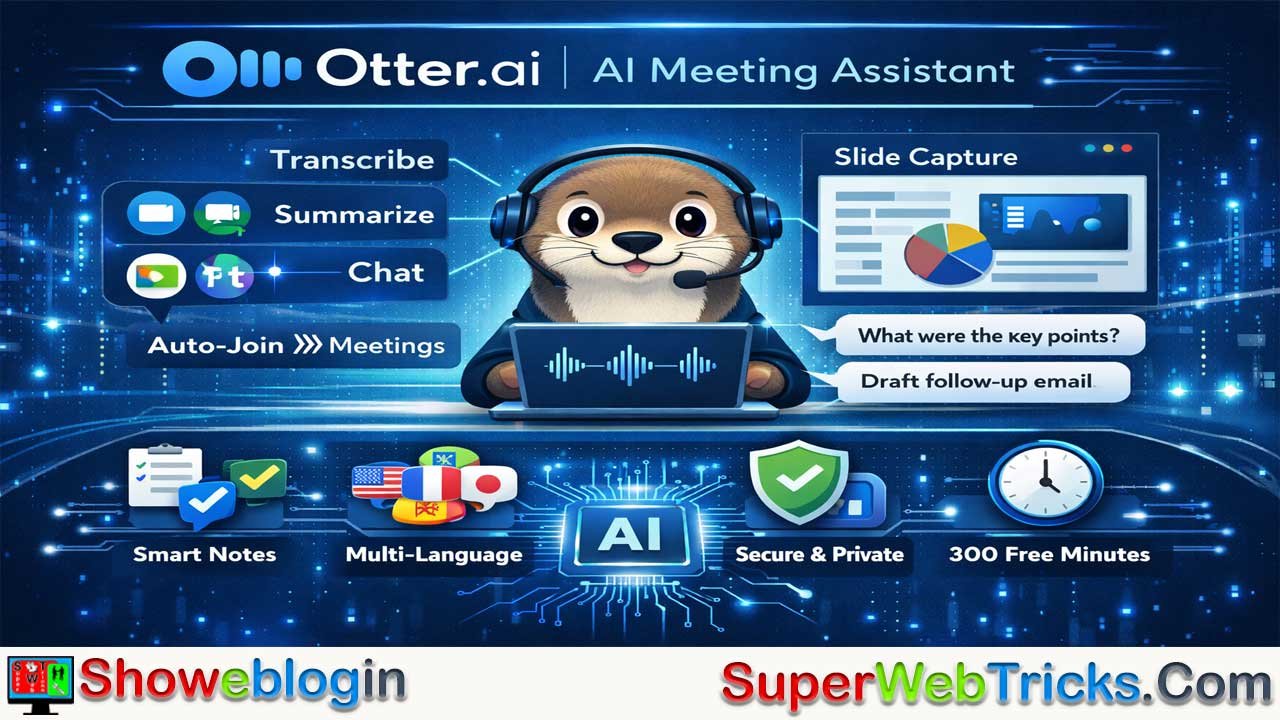
- Meeting Assistants: Fireflies.ai, Otter.ai, Fellow
- Scheduling: Motion, Reclaim.ai
- Workflow: Notion AI, Zapier AI
11. AI Healthcare & Medical
- Diagnostics: IBM Watson Health, DeepMind, Scispot
- Drug Discovery: BenevolentAI
- Mental Health: Wysa
12. AI Cybersecurity
- Threat Detection: Darktrace, AccuKnox, SentinelOne
- Fraud Prevention: Shield AI
- Application Security: Seceon
13. AI Education & Learning
- Tutoring: ScribeSense, Socratic, Duolingo Max
- Language Learning: Duolingo, Babbel AI
Impact Across Industries: The Concrete Outcomes
Software Development: 40-50% Faster Feature Delivery
Developers using GitHub Copilot, Cursor, and related tools report 40-50% reduction in boilerplate coding time. Bug fixes, testing, and documentation are largely automated. Small teams are now outproducing traditional departments.
Healthcare: Diagnostic Accuracy Exceeds Specialists
AI radiologists are diagnosing diseases faster and more accurately than human specialists. Predictive models identify high-risk patients enabling preventive intervention. Clinical workflows are becoming increasingly human-in-the-loop, with AI handling routine interpretation and humans focusing on complex cases.
Marketing: Personalized Campaigns at Scale
AI enables one-to-one personalization for millions of customers. Content, timing, and channel are dynamically optimized based on individual behavior and context. Campaign performance is predictable before launch.
Cybersecurity: Real-Time Autonomous Defense
Threats are detected and contained automatically, often before security teams are aware of the incident. Mean time to detection and mean time to respond have collapsed from hours/days to minutes/seconds.
Content Creation: Professional Output in Hours
Bloggers, video creators, and designers are producing professional-grade content at 5-10x their prior speed. The constraint is now strategy and creativity, not execution.
AI Tools for Health and Medical Industry
- Epic Systems – A widely used electronic health record (EHR) system that helps hospitals and clinics manage patient records, billing, and clinical workflows.
- Cerner – A comprehensive healthcare technology platform providing EHR, population health management, and revenue cycle management solutions.
- Meditech – A cloud-based EHR software that assists hospitals with patient data management, analytics, and interoperability.
- Athenahealth – A cloud-based platform offering EHR, medical billing, and patient engagement tools to improve healthcare administration.
- Allscripts – A health IT solution providing EHR, practice management, and financial solutions for healthcare organizations.
- McKesson – A healthcare supply chain and IT solutions provider, offering tools for pharmacy management, medical billing, and clinical support.
- eClinicalWorks – A cloud-based EHR system designed for private practices, providing telehealth, billing, and analytics tools.
- GE Healthcare Centricity – A medical imaging and EHR software that enhances diagnostic accuracy and clinical decision-making.
- Teladoc Health – A telemedicine platform that connects patients with healthcare professionals remotely for virtual consultations.
- Zocdoc – A digital healthcare marketplace that allows patients to find and book appointments with doctors online.
- Doximity – A professional networking tool for physicians, offering secure communication, telemedicine, and medical news updates.
- MDCalc – A clinical decision support tool providing medical calculators for risk assessment, diagnosis, and treatment planning.
- Watson Health (IBM) – An AI-powered healthcare analytics platform that helps with clinical decision-making and medical research.
- Omada Health – A digital health program focused on chronic disease prevention and management through personalized coaching and monitoring.
- Philips IntelliSpace – A healthcare informatics solution offering advanced imaging, patient monitoring, and data-driven clinical insights.
AI Tools for Apparel, Clothing & Fashion
- Vue.ai – AI-powered fashion personalization.
- Heuritech – AI for fashion trend forecasting.
- True Fit – AI-driven size and fit recommendations.
- Fashwell – AI-powered visual search for clothing.
- Syte.ai – AI-powered product discovery for apparel.
- Wide Eyes AI – Visual AI for fashion e-commerce.
- StyleScan – AI-driven virtual try-ons.
- Zalando AI – Fashion recommendation engine.
- Lykdat – AI-powered visual fashion search.
- Dressipi – AI for personalized fashion styling.
- Meteo AI – AI-driven weather-based fashion advice.
- Deep Fashion AI – AI-powered fashion analytics.
- SnapStyle AI – AI-driven outfit recommendations.
- Pixyle AI – AI-powered visual tagging for e-commerce.
- Clothing Fit AI – AI for body measurement and fit analysis.
AI Tools for Jewelry, Watches & Accessories
- GemsAI – AI-powered gemstone identification.
- Jewelry Cad Dream – AI-enhanced CAD software for jewelry design.
- Deep Image AI – AI-powered jewelry photo enhancement.
- Diamond Pro AI – AI-driven diamond selection and grading.
- Handsome AI – AI for high-end jewelry e-commerce.
- Mirror AI – Virtual jewelry try-on tool.
- Luxand AI – Facial recognition for personalized accessories.
- Gemstone AI – AI-powered gem valuation and grading.
- Karat AI – AI-based jewelry material analysis.
- RingAI – AI-driven custom ring design.
- Timepiece AI – AI-powered watch authentication.
AI Tools for Arts, Entertainment & Media
- Runway ML – AI video editing and generation.
- DALL·E 3 – AI-powered artistic image generation.
- DeepArt.io – AI-powered artistic image transformation.
- AIVA – AI-generated music composition.
- Boomy – AI music creation for independent artists.
- Synthesia – AI-powered video avatars for entertainment.
- Adobe Firefly – AI-powered creative tools.
- Lumen5 – AI-powered video creation.
- MuseNet – AI-powered multi-instrumental music generation.
- Deep Nostalgia – AI-driven photo animation.
- Jukebox AI – AI-generated music in multiple genres.
- Artbreeder – AI-powered collaborative artwork.
- GANPaint Studio – AI for interactive image editing.
- Reface AI – AI-powered deepfake face swap.
- Elai.io – AI video creation from text.
AI Tools for Automotive & Vehicles
- Waymo AI – AI-powered self-driving technology.
- Comma.ai – Open-source AI driver assistance.
- Tesla FSD AI – Tesla’s AI for autonomous driving.
- AImotive – AI-powered autonomous vehicle solutions.
- Nuro AI – AI for self-driving delivery vehicles.
- Ravin AI – AI-based vehicle inspection.
- Car Scanner AI – AI-driven car diagnostics.
- Hivemapper AI – AI-powered vehicle mapping.
- MotionGest AI – AI for gesture-based vehicle controls.
- Oxbotica AI – AI-driven autonomous driving software.
- Halo AI – AI-powered smart dashcams.
- SmartCar AI – AI for connected car analytics.
- DriveX AI – AI-powered vehicle condition reports.
- Fleet AI – AI for fleet management optimization.
AI Tools for Beauty & Personal Care
- ModiFace (L’Oréal AI) – AI-powered virtual makeup try-on.
- PerfectCorp – AI-powered beauty and skincare analysis.
- SkinVision – AI for skin health analysis.
- Foreo AI – AI-powered skincare personalization.
- YouCam Makeup – AI-powered beauty testing.
- Lumen AI – AI-driven personalized skincare.
- HiMirror AI – AI-powered smart mirror for skin assessment.
- Face++ AI – AI-driven facial beauty analysis.
- DeepSkin AI – AI-powered skin diagnosis.
- AI Glam AI – AI-driven virtual beauty assistant.
- BeautAI – AI for personalized skincare routines.
- Blynk AI – AI for hair styling and virtual makeovers.
- Derma AI – AI-driven dermatology and skincare solutions.
AI Tools for Business & Industrial
- IBM Watson AI – AI for enterprise solutions.
- Salesforce Einstein – AI-powered CRM.
- UiPath AI – AI-powered automation and RPA.
- KAI AI – AI-driven chatbot for finance.
- Zebra AI – AI-powered industrial automation.
- OpenAI Codex – AI-driven software development.
- Blue Prism AI – AI for robotic process automation.
- Darktrace AI – AI-powered cybersecurity.
- AI Builder (Microsoft) – AI for business process automation.
- DataRobot AI – AI-powered predictive analytics.
- H2O.ai – Open-source AI for enterprise solutions.
- C3.ai – AI-driven industrial automation and analytics.
- Qualtrics AI – AI-powered customer experience management.
AI Tools for Finance, Banking & Investing
- Kavout – AI-powered stock analysis.
- Alpaca AI – AI for automated stock trading.
- Zest AI – AI-powered credit underwriting.
- Tickeron – AI-driven stock trading insights.
- Bloomberg Terminal AI – AI-powered financial analysis.
- Numerai – AI-powered hedge fund predictions.
- Betterment AI – AI-driven robo-advisor.
- Sigmoidal AI – AI-powered financial forecasting.
- Yewno AI – AI-driven alternative investment insights.
- Upstart AI – AI-based personal loans and credit assessments.
- Wealthfront AI – AI-powered automated investment management.
- Affirm AI – AI-driven consumer lending.
- Addepar AI – AI-powered wealth management analytics.
Choosing Your AI Tools: A Practical Decision Framework
For Individual Creators (Bloggers, YouTubers, Podcasters)
Essential Stack:
- ChatGPT-5 ($20/month) for writing and ideation
- Perplexity (Free or paid) for research
- Surfer SEO or Frase ($99-199/month) for optimization
- Canva Pro AI ($119/year) for visuals
- Descript ($24/month) for video/podcast editing
- ElevenLabs ($99/month) for voice generation
Total monthly cost: ~$250-300 for professional-grade output.
For Small Agencies (5-20 people)
Add to the above:
- Jasper AI for team collaboration on writing
- Notion AI for project management
- n8n or Zapier for workflow automation
- Midjourney or Firefly for custom visuals
- Repurpose.io for multi-channel distribution
Total monthly: $500-1000 for a powerful content and automation stack.
For Enterprises
Implement:
- Agentic AI platforms (Agentforce, Copilot Studio) for process automation
- AI governance tools for compliance and safety
- Multi-agent orchestration (LangGraph) for complex workflows
- Domain-specific SLMs for specialized functions
- Enterprise cybersecurity AI for threat defense
Critical Considerations for 2026 AI Adoption
1. Governance and Accountability
As agents operate autonomously, transparency and control are non-negotiable. Organizations must implement observability, audit trails, and human-in-the-loop safeguards.
2. Data Privacy and On-Premise Processing
Regulatory frameworks are tightening. Privacy-first AI models that process data locally or on-premises will gain enterprise preference over cloud-dependent solutions.
3. Cost Optimization
The shift from training to inference spending will accelerate. Organizations must focus on inference efficiency, edge deployment, and specialized models to manage AI operational costs.
4. Talent and Reskilling
AI adoption requires reskilling workforce. The skill gap is shifting from “AI engineering” to “AI application” and “AI governance.” Organizations investing in training will move faster.
5. Model Selection
The one-size-fits-all model era is ending. Choose specialized tools for specific functions rather than relying on a single general-purpose model. Hybrid stacks outperform monolithic approaches.
Conclusion: AI as Strategic Imperative
2026 is not the beginning of AI—it’s the year AI becomes invisible, embedded into every workflow, decision, and process. Agentic AI, long-context memory, specialized models, and autonomous defense systems are transitioning from experimental to operational standard.
The organizations that will thrive are those that move decisively on three fronts:
- Adoption: Implement AI tools across creative, operational, and defensive functions. Waiting for perfection guarantees obsolescence.
- Integration: Build hybrid stacks—specialized tools for specific tasks, coordinated through modern automation platforms and orchestration frameworks.
- Governance: Establish clear accountability, transparency, and safety mechanisms. AI governance is not overhead; it’s the prerequisite for scaled deployment.
For individual creators, small teams, and enterprises alike, 2026 presents an unprecedented productivity inflection. The tools are here, proven, and affordable. The question is no longer “Should we adopt AI?” but “How quickly can we?”.
The competitive advantage in 2026 belongs not to those with the most advanced AI, but to those most adept at integrating AI into their workflows and making human teams more capable, not redundant. The future of work is not humans or AI—it’s humans and AI, working seamlessly together.